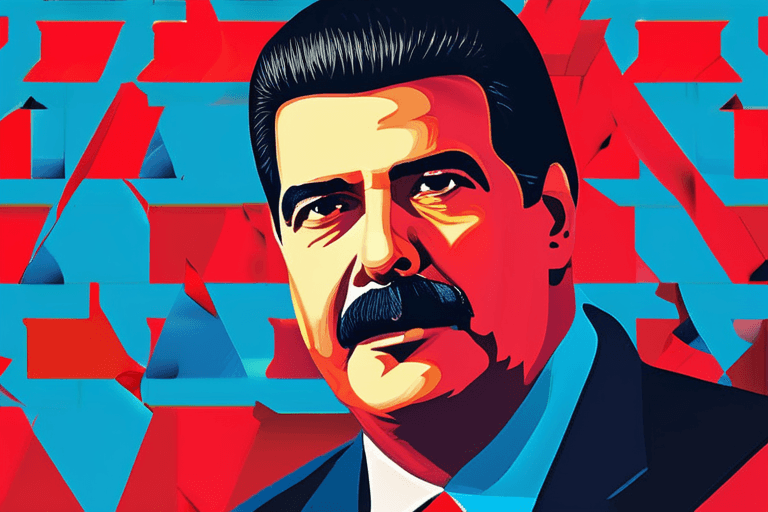
American forces reportedly abducted Venezuelan President Nicolas Maduro last week and transported him to a prison in New York City, following months of what critics describe as a U.S. campaign to manufacture consent for military intervention in Venezuela. The Trump administration is now allegedly shifting its narrative, moving away from the stated objective of combating a narco-state to focusing on the U.S. potentially taking control of Venezuela's substantial oil reserves.
The alleged shift in justification raises concerns among international observers about the true motivations behind U.S. involvement in Venezuela. Alejandro Velasco, Associate Professor at NYU, suggests that the evolving narrative points to a deeper interest in Venezuela's natural resources. Alexander Main, Director of International Policy at the Center for Economic and Policy Research (CEPR), echoed this sentiment, emphasizing the potential implications for regional stability and international law.
Venezuela has been mired in a deep political and economic crisis for years, marked by hyperinflation, shortages of essential goods, and widespread emigration. The Maduro government has faced accusations of authoritarianism and human rights abuses, leading to international condemnation and sanctions. The United States, under both Republican and Democratic administrations, has long been critical of Maduro's rule.
The situation is further complicated by Venezuela's geopolitical significance. The country holds the world's largest proven oil reserves, making it a strategic asset for global energy markets. Its location in South America also places it at the center of regional power dynamics, with countries like Russia and China maintaining close ties with the Maduro government.
JM MonteBlack, a Venezuelan-American journalist, highlighted the cultural and historical context of U.S.-Venezuelan relations, noting a long history of U.S. intervention in Latin America. Luis Valdez Jimenez, a lawyer and Venezuelan-American activist, emphasized the need for a solution that respects Venezuelan sovereignty and promotes democratic values.
The current status of Maduro remains unclear, and the Venezuelan government has yet to issue an official statement. The international community is closely watching the situation, with many calling for a peaceful and diplomatic resolution to the crisis. The next steps will likely involve negotiations between the U.S., Venezuela, and other key international actors, with the future of Venezuela's government and its vast oil reserves hanging in the balance.















Discussion
Join the conversation
Be the first to comment