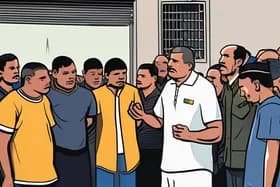
Protests persisted in Tehran's Grand Bazaar, a historically loyal stronghold of the Islamic Republic, despite Supreme Leader Ali Khamenei's attempts to differentiate between legitimate grievances and what he termed outright rebellion. The demonstrations, which began earlier this month, prompted authorities to deploy tear gas against protesters chanting anti-government slogans, some directly targeting Khamenei.
Khamenei publicly addressed the unrest, praising the bazaar merchants as among the most loyal supporters of the regime. He insisted that enemies of Iran could not exploit the bazaar to confront the Islamic Republic. "We talk to protesters; the officials must talk to them, but there is no benefit to talking to rioters. Rioters must be put in their place," he stated.
The bazaar, a centuries-old commercial hub, has traditionally been a key source of economic and political support for Iran's clerical establishment. Its merchants, known as bazaaris, played a significant role in the 1979 Islamic Revolution. However, recent economic hardship, fueled by international sanctions and internal mismanagement, has eroded that support. The sanctions, primarily imposed by the United States and its allies over Iran's nuclear program, have crippled the Iranian economy, leading to inflation, unemployment, and a decline in living standards.
Kayhan Valadbaygi, a Research Fellow at the International Institute of Social History, noted the significance of the bazaar's shift. "The protests within the bazaar are a worrying sign for the government," Valadbaygi said. "It indicates a broader discontent that extends beyond the usual opposition groups."
The current unrest reflects a growing frustration among Iranians from various segments of society. Similar protests have erupted in other cities across the country, fueled by economic grievances, political restrictions, and a lack of social freedoms. International observers are closely monitoring the situation, with many expressing concern over the government's response to the protests. Human rights organizations have condemned the use of force against demonstrators and called for the release of those detained.
The protests in the Tehran Bazaar and elsewhere represent a significant challenge to the Iranian government. While the long-term impact remains uncertain, the events highlight the growing disconnect between the ruling elite and a population increasingly dissatisfied with the status quo. The government has yet to announce any specific policy changes in response to the protests.











Discussion
Join the conversation
Be the first to comment