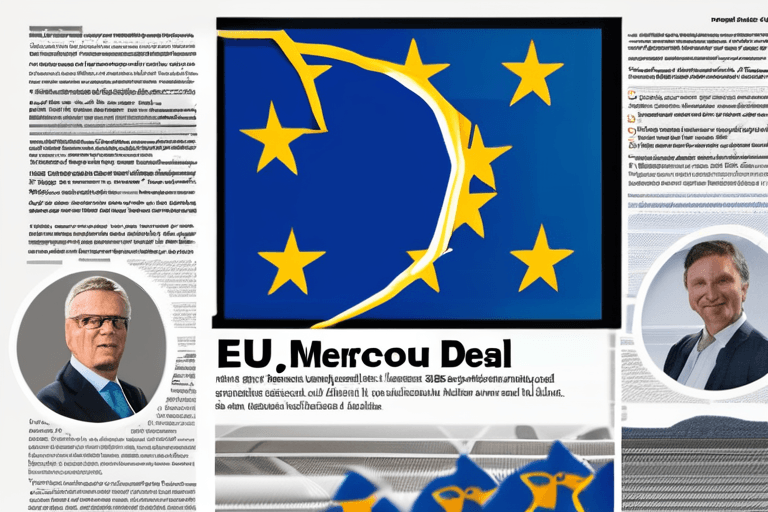
EU states endorsed a landmark free trade agreement with Mercosur nations, a move poised to reshape transatlantic commerce after a quarter-century of negotiations. The deal, encompassing Argentina, Brazil, Paraguay, and Uruguay, aims to eliminate tariffs on a wide array of goods, potentially unlocking billions in trade flows.
The agreement's financial implications are substantial. The EU anticipates tariff reductions that could save European exporters over €4 billion annually. Sectors expected to benefit significantly include automotive, machinery, and pharmaceuticals. Conversely, Mercosur countries gain enhanced access to the EU market for agricultural products like beef, poultry, and sugar. While specific projections vary, initial estimates suggest a potential increase in bilateral trade exceeding 20% within the first decade of implementation.
The market context surrounding the deal is complex. While proponents tout the agreement as a vital counterweight to growing protectionism and a strategic move to diversify supply chains, it has ignited fierce opposition, particularly from European farmers. Protests erupted across several EU member states, including Poland, France, Greece, and Belgium, as farmers voiced concerns over increased competition from cheaper South American agricultural imports. These protests highlight the delicate balancing act between fostering international trade and protecting domestic industries.
The EU-Mercosur agreement represents a significant milestone in the EU's trade policy. The EU has long sought to strengthen its economic ties with Latin America, viewing the region as a key growth market. The Mercosur bloc, despite facing economic challenges in recent years, remains a significant economic force, with a combined GDP exceeding $2 trillion. The agreement aligns with the EU's broader strategy of pursuing bilateral trade deals to enhance its global competitiveness.
Looking ahead, the EU-Mercosur agreement faces several hurdles before full implementation. The agreement must be ratified by the European Parliament and the legislatures of all Mercosur member states. This process could be lengthy and fraught with political challenges, given the strong opposition from certain sectors and political factions. Furthermore, concerns regarding environmental standards and labor practices in Mercosur countries could further complicate the ratification process. Despite these challenges, the EU remains committed to the deal, viewing it as a crucial step towards fostering closer economic and political ties with Latin America.














Discussion
Join the conversation
Be the first to comment