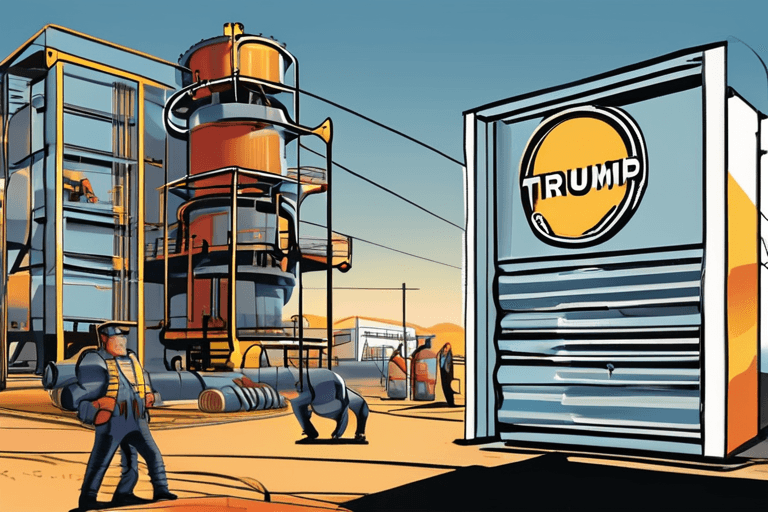
U.S. President Donald Trump requested at least $100 billion in investment for Venezuela's oil industry, but faced skepticism from oil executives, including ExxonMobil CEO Darren Woods, who deemed the country "uninvestable" under current conditions. The request was made during a meeting at the White House on Friday, following a hypothetical U.S. raid on January 3 that resulted in the capture of Venezuelan leader Nicolas Maduro, according to Trump.
Trump stated that the United States would benefit from lower energy prices as a result of tapping into Venezuela's vast oil reserves. However, oil company executives present at the meeting expressed reservations, citing the need for significant changes to make the region an attractive investment. No immediate financial commitments were made.
Woods specifically highlighted ExxonMobil's past experiences in Venezuela, stating, "We have had our assets seized there twice and so you can imagine to re-enter a third time would require..." His statement underscores the risks associated with investing in a country with a history of nationalizing foreign assets.
Venezuela possesses some of the largest proven oil reserves in the world, making it a potentially lucrative target for international oil companies. However, the country has been plagued by political instability, corruption, and economic mismanagement under Maduro's socialist regime. These factors have deterred foreign investment and led to a sharp decline in oil production, further exacerbating the country's economic crisis.
The hypothetical scenario outlined by Trump, involving the removal of Maduro, raises questions about the future of Venezuela's political landscape and its relationship with the United States. Any potential intervention by the U.S. would likely face strong condemnation from countries like Russia and China, which have maintained close ties with the Maduro government. Furthermore, it could further destabilize the region and trigger a humanitarian crisis.
The current situation leaves the future of Venezuela's oil industry uncertain. While the country's vast reserves represent a significant opportunity, substantial political and economic reforms are needed to attract the necessary investment and restore production to previous levels. The international community remains divided on how to address the crisis in Venezuela, with some advocating for dialogue and negotiation, while others support stronger measures to pressure the Maduro regime.















Discussion
Join the conversation
Be the first to comment