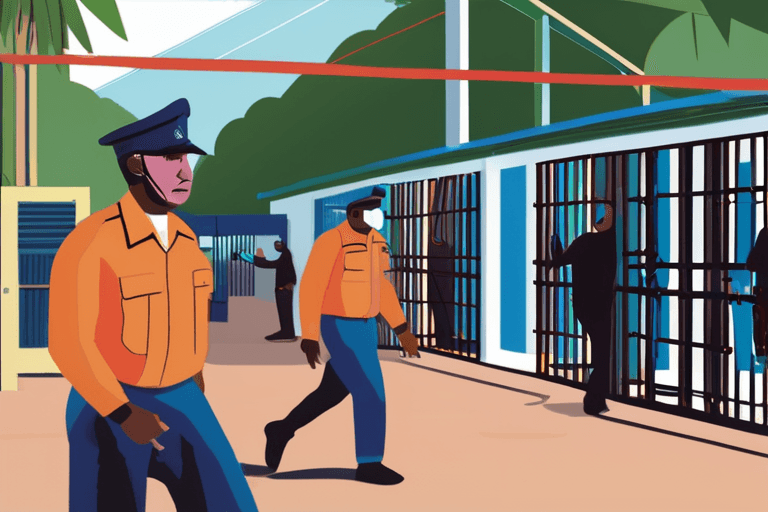
Nicaragua's left-wing government released dozens of prisoners Saturday, following pressure from the administration of United States President Donald Trump. The government of President Daniel Ortega announced in a statement that the prisoners, who were held in the national penitentiary system, were allowed to return to their families.
The statement did not specify the exact number of those freed, nor did it clarify whether they had been detained for political reasons. While the government presented the move as a gesture to commemorate 19 years of Ortega's government, Nicaragua has faced increasing pressure from the U.S. regarding its human rights record over the past year.
The release comes amid heightened scrutiny of Nicaragua's human rights situation by international organizations and governments. For years, Ortega's government has been criticized for its crackdown on dissent, particularly following widespread protests in 2018. These protests, initially sparked by social security reforms, quickly evolved into broader calls for Ortega's resignation, leading to a violent government response that resulted in numerous deaths and arrests.
The Trump administration has taken a particularly hard line on Nicaragua, levying sanctions against government officials and entities accused of human rights abuses and corruption. This pressure has been part of a broader U.S. policy aimed at promoting democracy and human rights in Latin America, particularly in countries like Venezuela and Cuba.
The move could be interpreted as an attempt by Ortega's government to ease international pressure and improve its image on the global stage. However, skepticism remains among human rights groups and opposition figures, who argue that genuine reform requires more than just the release of prisoners. They are calling for comprehensive investigations into past abuses, accountability for perpetrators, and guarantees of freedom of expression and assembly.
The situation in Nicaragua remains complex, with deep political divisions and a struggling economy. The release of prisoners is a significant development, but its long-term impact on the country's political landscape and its relationship with the international community remains to be seen. Further developments are expected as international observers monitor the situation and assess the extent of the releases and their implications for human rights in Nicaragua.
















Discussion
Join the conversation
Be the first to comment