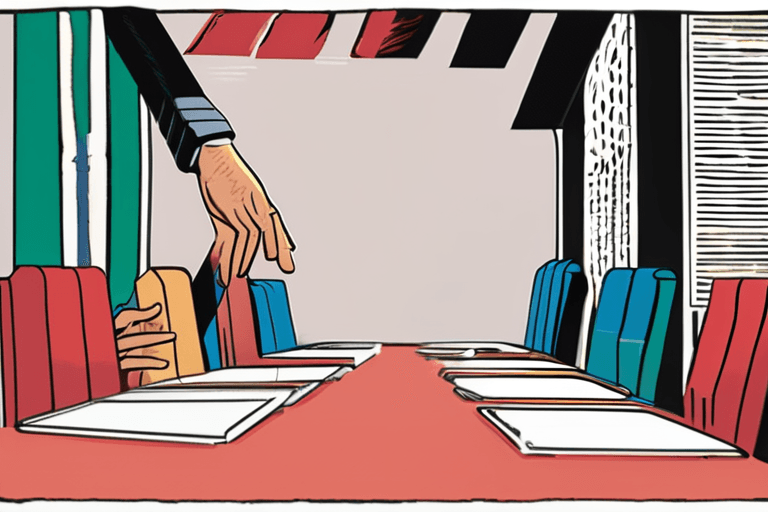
President Claudia Sheinbaum paced the floor of her office, the weight of two nations, and perhaps the hemisphere, pressing down on her. Just days after the dramatic capture of Venezuelan President Nicolás Maduro, a move that sent shockwaves through Latin America, the familiar, yet newly sharpened, threat from the north hung heavy in the air. Donald Trump, in a televised interview, had declared the United States would begin "hitting land" in Mexico, targeting drug cartels. The words, delivered with characteristic bluntness, landed like a hammer blow in Mexico City, forcing Sheinbaum and her advisors into a tense, closed-door huddle, agonizing over every word, every gesture, every potential consequence.
For months, the specter of U.S. intervention in Mexico's cartel wars had loomed, a dark cloud on the horizon of the bilateral relationship. Trump's pronouncements, often dismissed as political posturing, had nevertheless stirred deep anxieties rooted in a history of U.S. involvement in Latin American affairs. From the Monroe Doctrine to the interventions of the Cold War, the region has long been wary of its powerful northern neighbor. The capture of Maduro, while celebrated by some as a victory for democracy, also served as a stark reminder of the potential for external forces to reshape the political landscape.
The current crisis unfolds against a backdrop of complex geopolitical dynamics. Mexico, a nation grappling with persistent violence and corruption, finds itself caught between the pressures of U.S. demands and the imperative to safeguard its sovereignty. The "war on drugs," a decades-long campaign championed by the United States, has arguably fueled the very cartels it seeks to dismantle, creating a lucrative black market and empowering criminal organizations.
"The situation is incredibly delicate," said Dr. Isabella Ramirez, a professor of international relations at the National Autonomous University of Mexico. "Mexico is walking a tightrope. On one side, there's the economic and political pressure from the U.S. On the other, there's the deep-seated national pride and the historical resentment of foreign interference."
The dilemma facing Sheinbaum is not merely a political one; it is deeply personal, resonating with the collective memory of a nation that has long guarded its independence. The legacy of figures like Benito Juárez, who resisted French intervention in the 19th century, continues to inspire a fierce commitment to self-determination.
"We must defend our sovereignty," declared a statement released by the Mexican government, carefully crafted to convey resolve without escalating tensions. "Mexico will not tolerate any violation of its territorial integrity. We are committed to working with the United States to combat drug trafficking, but this must be done with respect for our laws and our people."
The path forward remains uncertain. Some analysts suggest a renewed focus on addressing the root causes of drug trafficking, such as poverty and lack of opportunity, while others advocate for a more assertive stance against U.S. pressure. Whatever course Mexico chooses, the coming weeks will be critical in shaping the future of its relationship with the United States and its role in the evolving geopolitical landscape of Latin America. The world watches, waiting to see how Mexico will navigate this perilous moment, balancing the demands of its powerful neighbor with the enduring spirit of its own national identity.

















Discussion
Join the conversation
Be the first to comment