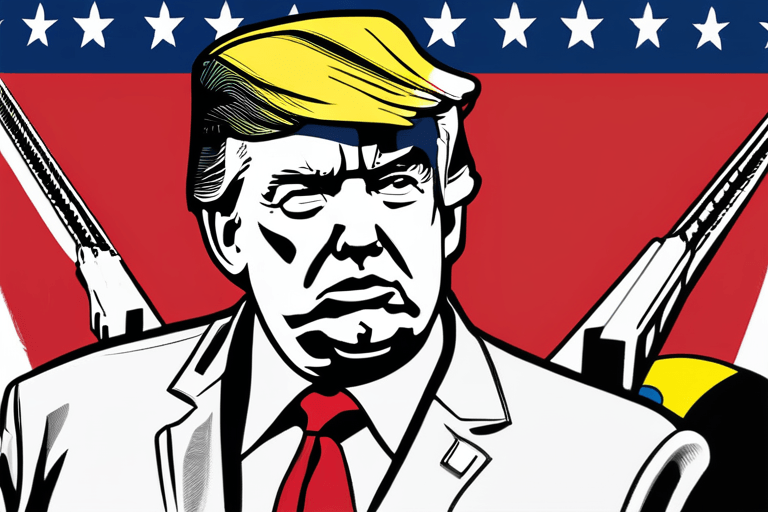
Before sunrise on January 3rd, a flurry of WhatsApp messages zipped across Latin America, connecting presidents and policymakers wrestling with a seismic event that threatened to redefine regional politics: the United States, under President Trump, had seized Venezuelan President Nicolás Maduro. The bold move exposed deep fissures already fracturing the continent, revealing a landscape of shifting alliances and precarious self-preservation.
The capture of Maduro, as reported by sources familiar with the situation, ignited a firestorm of reactions. Brazil, Mexico, and Colombia, each led by leftist governments, issued statements ranging from carefully worded disapproval to outright condemnation of the American intervention. These nations, wary of setting a precedent for external interference, emphasized the importance of national sovereignty and diplomatic solutions. In contrast, a chorus of right-leaning voices, including Argentina, El Salvador, and Ecuador, openly celebrated the action, viewing Maduro as a symbol of authoritarianism and corruption. Smaller nations like Guatemala and Peru, meanwhile, opted for silence, seemingly hoping to avoid attracting unwanted attention from Washington.
This stark divergence underscores the increasingly assertive role the Trump administration is playing in Latin American affairs. While the public pronouncements vary, a common thread unites these nations: a desire to navigate the new era of U.S. interventionism without becoming a target. The situation highlights a significant shift from previous administrations, which often favored multilateral diplomacy and economic incentives. The Trump administration, however, has demonstrated a willingness to employ more direct and forceful tactics, particularly in addressing perceived threats to U.S. interests.
The policy details behind this shift are complex. The Trump administration has consistently accused Maduro's government of human rights abuses, electoral fraud, and fostering a climate of instability in the region. These accusations have been used to justify a range of actions, including economic sanctions, diplomatic pressure, and, ultimately, the reported capture of the Venezuelan president. Critics argue that such actions undermine international law and risk destabilizing the region further.
"The situation is incredibly delicate," says Dr. Isabella Martinez, a professor of Latin American studies at the University of Texas. "On one hand, there's a genuine desire to see democratic reforms in Venezuela. On the other hand, there's a deep-seated fear of U.S. interventionism, which has a long and often negative history in the region."
The implications of this event extend far beyond Venezuela. The capture of Maduro has raised fundamental questions about the limits of U.S. power, the future of regional diplomacy, and the balance between national sovereignty and international intervention. As Latin American nations grapple with these challenges, the shadow of U.S. influence looms large, shaping their decisions and dictating the course of regional politics. The coming months will be crucial in determining whether this new era of U.S. interventionism will lead to greater stability or further fragmentation in Latin America.















Discussion
Join the conversation
Be the first to comment