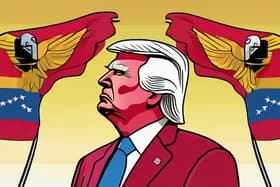
U.S. President Donald Trump urged Cuba to "make a deal" amid escalating tensions between the two nations and a tightening of sanctions against the island nation. Trump's statement, made Sunday on Truth Social, warned of consequences if Cuba did not comply, specifically targeting the flow of Venezuelan oil and financial support. He asserted that the era of Venezuelan oil and money flowing to Cuba was over, stating, "THERE WILL BE NO MORE OIL OR MONEY GOING TO CUBA - ZERO!"
The renewed pressure follows the U.S. seizure of Venezuelan leader Nicolás Maduro in a January 3 raid on Caracas, and a series of confiscations of oil tankers allegedly carrying sanctioned Venezuelan oil to Cuba. These actions have exacerbated an existing fuel and electricity crisis in Cuba, which relies heavily on Venezuelan oil imports. Venezuela, a long-standing ally of Cuba, is believed to supply approximately 35,000 barrels of oil per day to the island.
Cuba's response has been defiant. Foreign Minister Bruno Rodríguez Parrilla asserted Cuba's sovereign right to import fuel "without interference," while President Miguel Díaz-Canel Bermúdez declared, "No one dictates what we do."
The relationship between Cuba and Venezuela dates back to the presidency of Hugo Chávez, who forged a strong alliance based on socialist ideology and mutual economic support. In exchange for Venezuelan oil, Cuba has provided medical professionals, educators, and security advisors to Venezuela. This arrangement has been crucial for Cuba, particularly since the collapse of the Soviet Union in the early 1990s, which led to a severe economic crisis known as the "Special Period."
The Trump administration's actions are a continuation of a policy aimed at isolating both Cuba and Venezuela, with the goal of regime change in both countries. The U.S. argues that Cuba's support for Maduro's government is a key factor in the ongoing political and economic crisis in Venezuela.
The current situation has drawn international concern, with some nations criticizing the U.S. for what they see as interference in the internal affairs of sovereign states. Others support the U.S. position, arguing that Maduro's government is illegitimate and that Cuba's support enables its continued rule. The European Union has called for a peaceful and negotiated solution to the crisis in Venezuela, while also urging the U.S. to avoid actions that could further destabilize the region.
The future of U.S.-Cuba relations remains uncertain. Trump's ultimatum suggests a hardening of the U.S. position, while Cuba's defiant response indicates a willingness to resist external pressure. The ongoing fuel crisis in Cuba, coupled with the broader economic challenges facing the country, could further complicate the situation and potentially lead to increased social unrest. The international community is watching closely, as the outcome of this standoff could have significant implications for the wider region.
















Discussion
Join the conversation
Be the first to comment