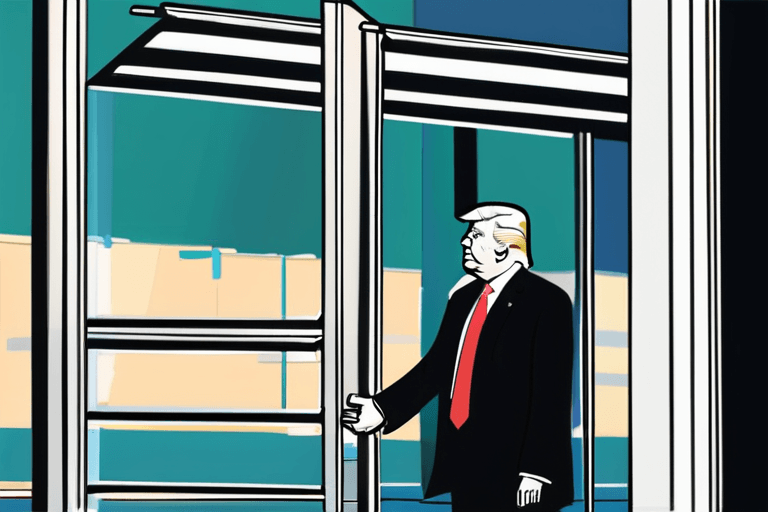
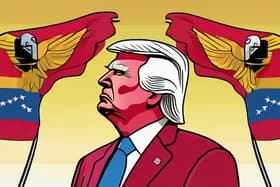
U.S. President Donald Trump issued a warning to Cuba on Sunday, urging the nation to "make a deal" or face further economic consequences as the flow of Venezuelan oil and money is expected to cease. Trump's statement, posted on Truth Social, follows the U.S. seizure of Venezuelan leader Nicolás Maduro in a January 3 raid in Caracas and escalating efforts to disrupt oil shipments from Venezuela to Cuba.
Venezuela, a long-standing ally of Cuba, has been a crucial provider of oil to the island nation, reportedly sending approximately 35,000 barrels per day. This supply has been vital for Cuba's energy needs, particularly as the country faces economic challenges. The Trump administration's tactic of confiscating sanctioned Venezuelan oil tankers has already begun to exacerbate fuel and electricity shortages in Cuba. On Friday, a fifth oil tanker allegedly carrying sanctioned Venezuelan oil was seized by U.S. forces.
"Cuba lived, for many years, on large amounts of OIL and MONEY from Venezuela," Trump stated on Truth Social. "In return, Cuba provided 'Security Services' for the last two Venezuelan dictators, BUT NOT ANYMORE! THERE WILL BE NO MORE OIL OR MONEY GOING TO CUBA - ZERO! I strongly suggest they make a deal, BEFORE I..."
The Cuban government has responded defiantly to the U.S. pressure. Cuba's foreign minister asserted the nation's right to import fuel "without interference," while the president declared, "No one dictates what we do."
The relationship between Cuba and Venezuela dates back to the late 20th century, solidifying under the leadership of Fidel Castro and Hugo Chávez. Venezuela's oil wealth has been a lifeline for Cuba, particularly after the collapse of the Soviet Union, which had previously been Cuba's primary economic partner. In exchange, Cuba has provided Venezuela with medical professionals, educators, and security advisors.
The U.S. has maintained a trade embargo against Cuba for decades, seeking to promote democratic reforms and human rights improvements. The Trump administration has taken a particularly hard line on Cuba, reversing some of the Obama-era policies that sought to normalize relations between the two countries. The current situation reflects a continuation of this strategy, aimed at isolating Cuba economically and politically.
The future of U.S.-Cuban relations remains uncertain. The Cuban government has shown no signs of yielding to U.S. pressure, and the potential for further escalation remains. The situation is being closely watched by other nations in Latin America and around the world, as it has implications for regional stability and international trade.













Discussion
Join the conversation
Be the first to comment