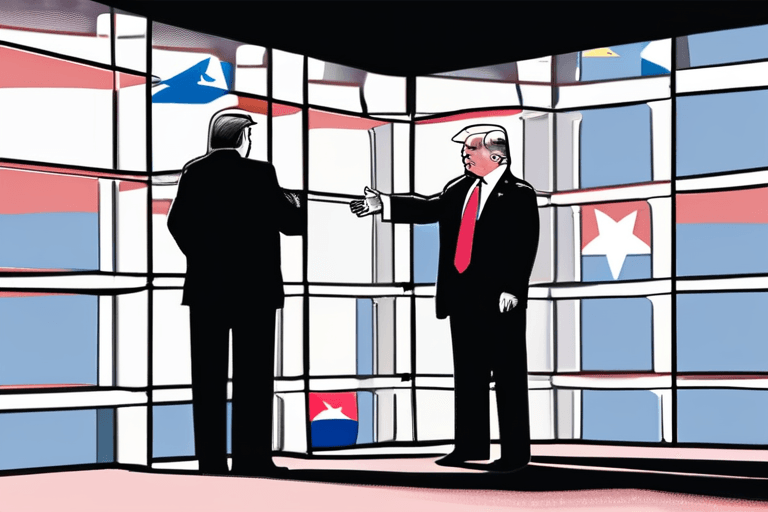
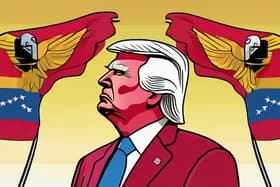
President Donald Trump warned Cuba on Sunday to "make a deal" or face unspecified consequences, asserting that the flow of Venezuelan oil and money to the island would cease following the anticipated fall of Nicolás Maduro. Trump's statement, posted on his Truth Social platform, intensified pressure on Cuba, a long-standing U.S. adversary and key ally of Venezuela.
"THERE WILL BE NO MORE OIL OR MONEY GOING TO CUBA ZERO!" Trump wrote, adding, "I strongly suggest they make a deal, BEFORE IT IS TOO LATE." He did not elaborate on the specifics of the deal he envisioned.
Cuba has historically relied heavily on Venezuela for oil, particularly under preferential terms established during the Hugo Chávez era. This arrangement has been crucial for the Cuban economy, which has faced significant challenges since the collapse of the Soviet Union in the early 1990s. The U.S. has maintained a trade embargo against Cuba for over six decades, further straining the island's economic situation.
The relationship between Cuba and Venezuela deepened significantly under the leadership of Hugo Chávez, who forged a close political and economic alliance with Fidel Castro. Venezuela became Cuba's primary trading partner and a vital source of subsidized oil, while Cuba provided Venezuela with medical professionals, educators, and advisors. This partnership has been a cornerstone of leftist politics in Latin America, often challenging U.S. influence in the region.
The Trump administration has consistently taken a hard-line stance against both Cuba and Venezuela, tightening sanctions and increasing diplomatic pressure. The U.S. has accused Cuba of supporting Maduro's regime and contributing to the political and economic crisis in Venezuela. Cuba, in turn, has denounced U.S. interventionism and defended its right to maintain relations with Venezuela.
Shipping data indicates that no oil cargoes have departed Venezuelan ports for Cuba since Maduro's removal last week, suggesting the U.S. blockade is having an immediate impact. The potential disruption of oil supplies could exacerbate Cuba's economic difficulties, potentially leading to social unrest.
The international community remains divided on the situation in Venezuela and the appropriate response. Some countries, including Russia and China, continue to support Maduro, while others have recognized opposition leader Juan Guaidó as the interim president. The European Union has called for free and fair elections in Venezuela but has also expressed concerns about the impact of sanctions on the Venezuelan people. The future of Cuba's relationship with Venezuela, and its potential implications for the island's political and economic stability, remain uncertain.













Discussion
Join the conversation
Be the first to comment