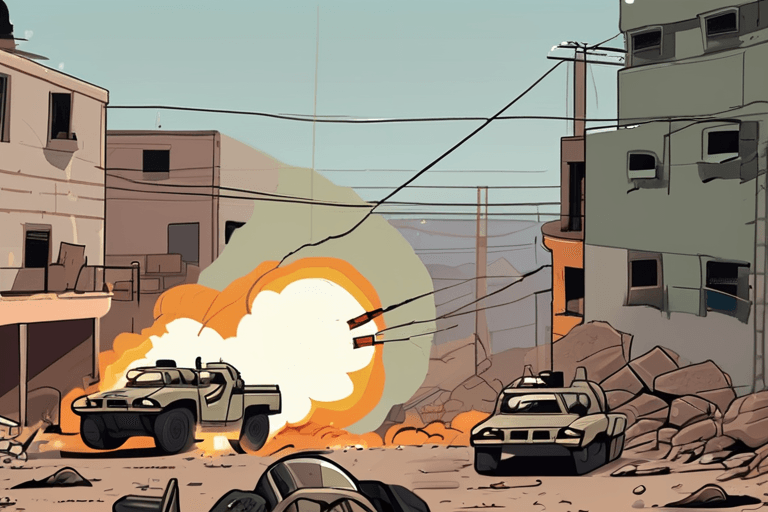
The Lebanese Ministry of Health reported that an Israeli strike on a vehicle in Bint Jbeil city, located in southern Lebanon, led to the death of one Lebanese citizen. The Israeli army claimed the strike targeted a member of Hezbollah, accusing the organization of violating a previous agreement.
These attacks occurred days after the Lebanese military announced the completion of the first phase of a nationwide plan to disarm Hezbollah south of the Litani River. However, Israel has deemed these efforts insufficient. The Litani River has long been considered a de facto boundary in the region, with various agreements aiming to limit Hezbollah's presence south of it.
The recent escalation highlights the ongoing tensions between Israel and Hezbollah, a Lebanese political and military organization. The conflict between the two has a long history, marked by periods of intense fighting and uneasy truces. Israel views Hezbollah as a major security threat, citing its arsenal of rockets and its close ties to Iran. Hezbollah, in turn, sees itself as a defender of Lebanon against Israeli aggression.
The situation is further complicated by the involvement of various international actors. The United Nations has peacekeeping forces stationed in southern Lebanon, tasked with monitoring the ceasefire and preventing further escalation. Several countries have also attempted to mediate between Israel and Lebanon, seeking a lasting resolution to the conflict.
The current status remains volatile, with the potential for further escalation. The international community is closely monitoring the situation, urging both sides to exercise restraint and avoid actions that could lead to a wider conflict. The next steps will likely involve diplomatic efforts to de-escalate tensions and address the underlying issues that fuel the conflict.


















Discussion
Join the conversation
Be the first to comment