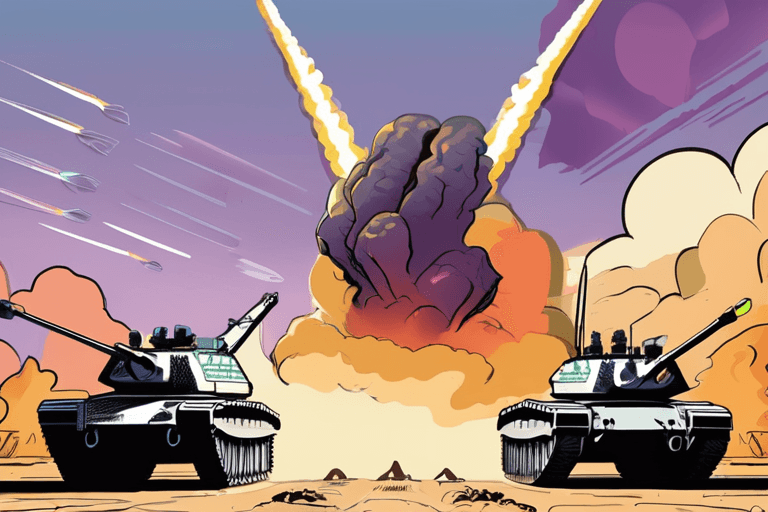
U.S. President Donald Trump stated that the U.S. military is considering "very strong options" regarding Iran, potentially including military intervention, in response to ongoing protests within the country. Speaking to reporters aboard Air Force One on Sunday, Trump said, "We're looking at it very seriously. The military is looking at it, and we're looking at some very strong options. We'll make a determination."
Trump also claimed that Iranian leadership had contacted Washington seeking negotiations following his threats of military action, and that a meeting was being arranged. However, he added, "We may have to act before a meeting."
The president's remarks came as Iranian leaders issued stern warnings against any military intervention. Parliament Speaker Mohammad Baqer Qalibaf stated that in the event of an attack on Iran, "the occupied territories Israel as well as all US bases and ships will be our legitimate target."
The protests in Iran began on December 28, reportedly triggered by economic grievances among merchants. These demonstrations reflect a broader history of socio-political unrest in Iran, often fueled by economic hardship, government policies, and restrictions on personal freedoms.
The potential for U.S. military action raises concerns internationally, given the already volatile geopolitical landscape in the Middle East. Any intervention could further destabilize the region, potentially drawing in other actors and exacerbating existing conflicts. The relationship between the U.S. and Iran has been fraught with tension for decades, marked by disagreements over Iran's nuclear program, its regional influence, and U.S. sanctions.
The United Nations and various international bodies have called for de-escalation and dialogue to address the situation in Iran. Many countries are closely monitoring developments, urging restraint and emphasizing the importance of peaceful resolution. The situation remains fluid, with the possibility of further escalation dependent on both internal developments within Iran and external actions by the U.S. and other involved parties.













Discussion
Join the conversation
Be the first to comment