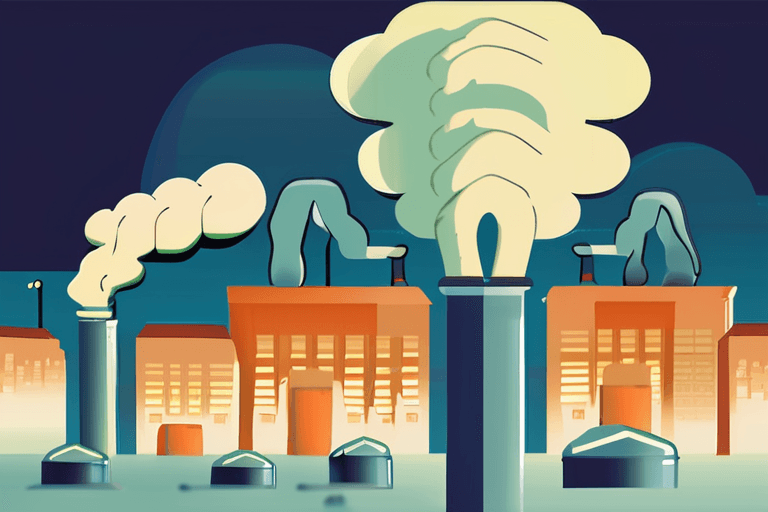
The Trump administration's Environmental Protection Agency (EPA) is reportedly planning to disregard the health benefits of reducing air pollution when creating regulations for ozone and fine particulate matter, a move that breaks with decades of established practice, according to a report in the New York Times. This shift could have significant implications for public health and the future of environmental regulation, potentially prioritizing economic considerations over the well-being of citizens.
Since the Reagan administration, the EPA has assigned a monetary value to human life to conduct cost-benefit analyses of pollution controls. This approach allowed the agency to weigh the economic costs of reducing pollution against the health benefits of prolonging human life. If the health benefits outweighed the costs, it provided an economic justification for stricter regulations. Every administration since Reagan has continued this practice.
Ozone and fine particulate matter, also known as PM2.5, have been linked to cardiovascular ailments such as asthma, heart disease, and emphysema. The risks of air pollution have been known for decades, which led to the EPA's founding under President Richard Nixon. The EPA's original mandate was to protect human health and the environment by writing and enforcing regulations based on laws passed by Congress.
The potential consequences of the EPA's new approach are far-reaching. By no longer considering the value of human health when regulating air pollution, the agency could weaken existing regulations and make it more difficult to implement new ones. This could lead to increased levels of air pollution, resulting in higher rates of respiratory and cardiovascular diseases, and ultimately, a decrease in overall public health.
The EPA has not yet officially announced its new policy, but the report in the New York Times suggests that the change is imminent. If the EPA follows through with its plans, it is likely to face legal challenges from environmental groups and public health advocates. The outcome of these challenges could determine the future of air pollution regulation in the United States.

















Discussion
Join the conversation
Be the first to comment