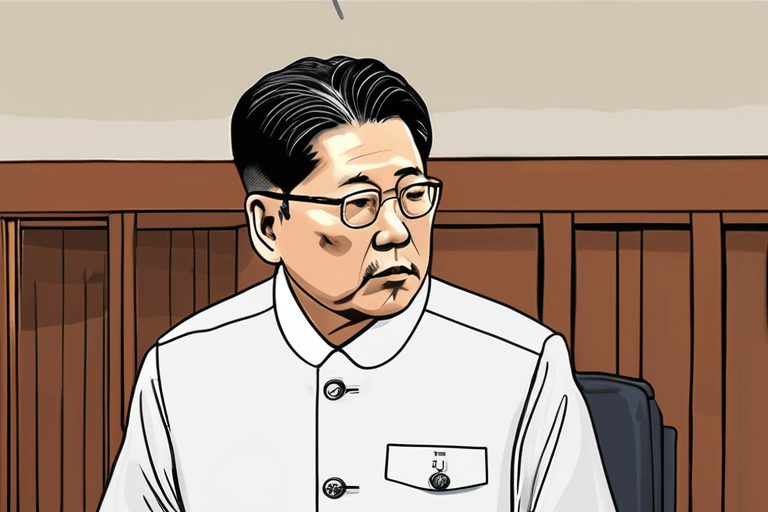
Prosecutors in South Korea have requested the death penalty for former President Yoon Suk Yeol, who is accused of leading an insurrection in December 2024. The request was made during closing arguments in Yoon's trial in Seoul, where he is charged with attempting to impose military rule.
The prosecution argued that Yoon was the "ringleader of an insurrection," an act that plunged the country into political turmoil despite lasting only a few hours, according to Seoul correspondent Jake Kwon. Yoon was subsequently impeached by parliament and detained to face trial.
Yoon has denied the charges, claiming that his declaration of martial law was merely a symbolic act intended to highlight the alleged misconduct of the opposition party.
The charge of leading an insurrection carries a potential sentence of death or life imprisonment under South Korean law. Prosecutors are legally obligated to request one of these penalties when trying a defendant for insurrection. However, South Korea has not carried out an execution in nearly 30 years; the last execution occurred in 1996 when former military dictator Chun Doo-hwan was put to death.
The trial and the potential application of the death penalty raise complex legal and ethical questions. The case highlights the ongoing tensions between political power, legal accountability, and historical precedent in South Korea. The court's decision will have significant implications for the country's political landscape and its approach to dealing with leaders accused of abusing their power.
The court is expected to deliver its verdict in the coming weeks. The decision will be closely watched both domestically and internationally, as it could set a precedent for how South Korea handles cases of alleged presidential misconduct and attempts to subvert democratic processes.


















Discussion
Join the conversation
Be the first to comment