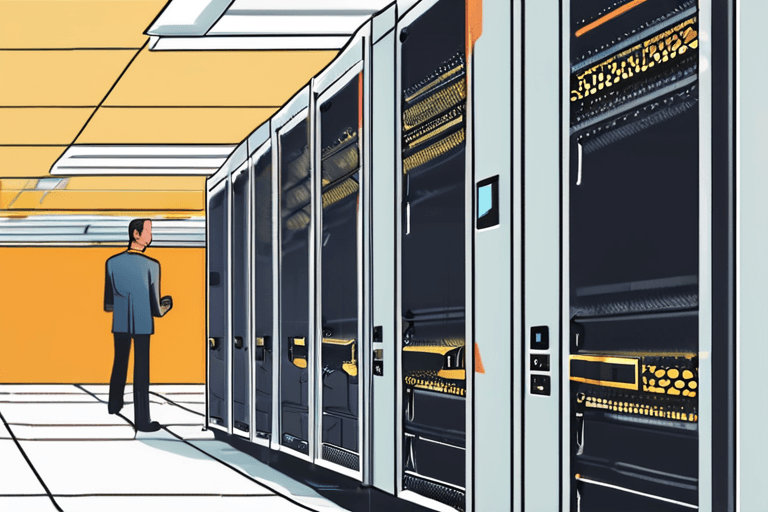
The future of the multi-billion dollar data center industry may face disruption from an unexpected source: the very devices they support. A shift towards on-device AI processing, spearheaded by tech giants like Apple and Microsoft, threatens to decentralize the current model of centralized data storage and computation.
Perplexity CEO Aravind Srinivas recently predicted that powerful, personalized AI tools will eventually run directly on consumer devices, eliminating the need to transmit data to and from massive data centers. This shift could significantly impact the data center market, which is projected to reach hundreds of billions of dollars in the coming years. While specific financial projections for the potential decline in data center reliance are still nascent, the trend towards edge computing and on-device processing is undeniable.
The implications for the market are substantial. Currently, AI applications rely heavily on data centers for processing power. However, if a significant portion of AI tasks can be handled locally on devices, the demand for centralized computing resources could plateau or even decline. This would affect data center operators, hardware manufacturers, and cloud service providers, potentially reshaping the competitive landscape.
Apple's introduction of Apple Intelligence, which runs some features on specialized chips within its latest devices, exemplifies this trend. The company claims this approach offers faster processing and enhanced data security. Similarly, Microsoft's Copilot laptops incorporate on-device AI processing capabilities. These developments signal a move towards distributing AI processing power away from centralized data centers and closer to the end-user.
However, the widespread adoption of on-device AI faces challenges. Currently, only premium-priced devices possess the necessary processing power. The future hinges on whether manufacturers can develop cost-effective solutions to integrate powerful AI processing capabilities into mainstream devices. If successful, the long-term impact on the data center industry could be transformative, potentially ushering in an era where the smartphone rivals the data center in computational significance.















Discussion
Join the conversation
Be the first to comment