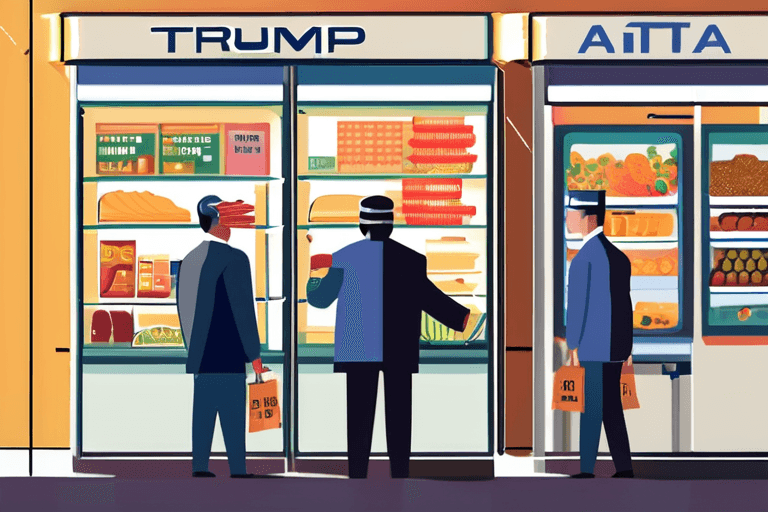
Grocery prices are on the rise, challenging claims made by President Trump's administration about improving affordability for average Americans. With the first anniversary of President Trump's second term approaching, data indicates significant price increases in essential food items.
The cost of beef has surged by 16.4 percent in the past year, while coffee prices have jumped by 19.8 percent. Lettuce and frozen fish have also seen notable increases, with prices up 7.3 percent and 8.6 percent, respectively. Despite these figures, President Trump stated on Tuesday in Detroit that "Grocery prices are starting to go rapidly down," a claim that contradicts available data. This is not the first time the president has made such assertions.
Several factors contribute to the rising cost of food, and not all food products are affected equally. For example, the price of eggs has decreased significantly over the past year. Elements influencing food prices include fertilizer, machinery, labor, fuel costs, weather conditions, geographical factors, and consumer demand. These factors are often difficult to control. Some of President Trump's policies, such as tariffs and immigration enforcement, have also contributed to higher costs.
The increasing food prices disproportionately affect low-income families. The situation highlights the complexities of economic factors influencing the cost of living and the challenges in accurately predicting and managing these fluctuations.


















Discussion
Join the conversation
Be the first to comment