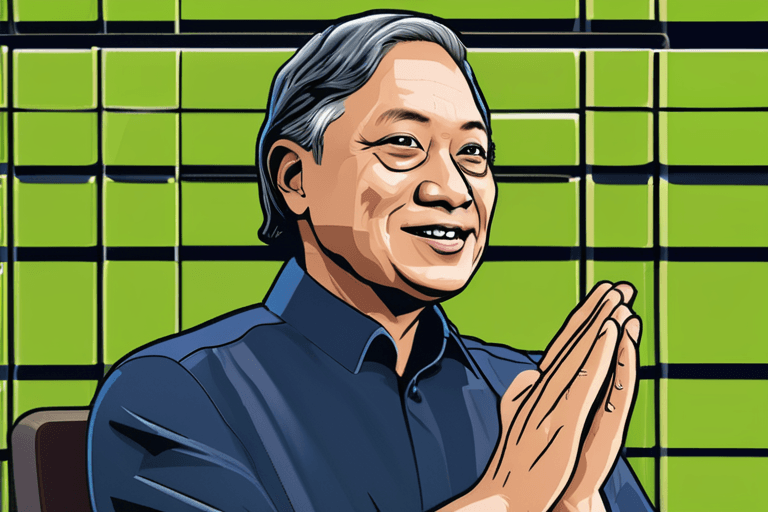
Nvidia CEO Jensen Huang expressed confidence that artificial intelligence will ultimately boost productivity and hiring, despite current anxieties surrounding the technology's impact on the job market. His perspective comes at a time when labor economists are grappling with concerning trends. 2023 saw the weakest non-recession job growth since 2003, a situation fueled by tariffs, tighter immigration policies, and broader economic uncertainties.
Huang believes the present slowdown is a temporary phase, a period of adjustment before AI unlocks a more productive economy. He argued that AI will drive revenue growth, leading to increased hiring across various sectors. However, Huang cautioned that this transition will not be without its challenges. The integration of AI will necessitate a significant restructuring of roles and responsibilities, requiring workers to acquire new skills and demonstrate adaptability.
The rise of AI is expected to have a disruptive effect on the job market, with some roles becoming obsolete while new ones emerge. This mirrors historical trends observed during previous industrial revolutions. The long-term impact on specific sectors and the overall unemployment rate remains uncertain, but analysts predict a significant shift in the demand for different skill sets. Companies that proactively invest in AI training and upskilling programs for their employees are likely to gain a competitive advantage.
Nvidia, a leading designer of graphics processing units (GPUs), stands to benefit significantly from the increasing adoption of AI. The company's GPUs are essential for training and deploying AI models, positioning Nvidia as a key player in the AI ecosystem. Nvidia's stock price has surged in recent years, reflecting investor confidence in the company's growth prospects.
Looking ahead, the successful integration of AI into the workforce will depend on effective collaboration between businesses, governments, and educational institutions. Investing in education and training programs that equip workers with the skills needed to thrive in an AI-driven economy will be crucial. While the transition may be challenging, Huang remains optimistic that AI will ultimately create a more prosperous and productive future.
















Discussion
Join the conversation
Be the first to comment