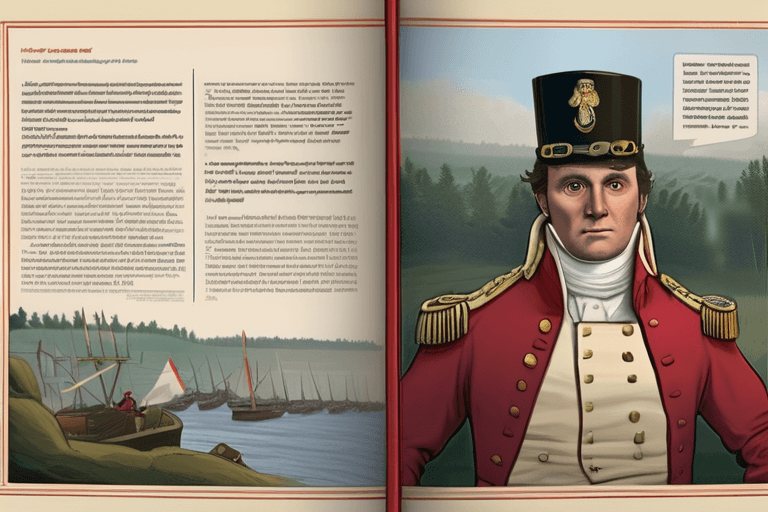
A previously unknown memoir written by Shadrack Byfield, a British soldier who fought in the War of 1812, has resurfaced, potentially altering the historical understanding of his life after military service. The memoir, detailed in a new paper published in the Journal of British Studies, complicates the traditionally idealized image of Byfield, who lost his left arm during the conflict with the United States.
Byfield's story has become well-known, particularly in North America, through popular histories, including a children's book and a PBS documentary, which portray him as an example of stoic perseverance in the face of disability. These accounts often focus on his resilience and adaptation after the amputation.
Historian Eamonn O'Keeffe of Memorial University of Newfoundland in St. Johns, Canada, discovered the memoir. O'Keeffe, who developed an interest in Byfield after reading the 1985 children's novel "Redcoat" by Gregory Sass, explained the significance of the find. "There are dozens of memoirs written by British rank-and-file veterans of the Napoleonic Wars, but only a handful from the War of 1812, which was much smaller in scale," O'Keeffe told Ars.
The War of 1812, a conflict between the United States and Great Britain, stemmed from a variety of maritime disputes and American expansionist desires. While overshadowed in Europe by the Napoleonic Wars, the War of 1812 held significant consequences for the development of both the United States and Canada, shaping their national identities and solidifying their borders. The conflict also involved various Indigenous nations, whose alliances and territories were deeply impacted by the outcome.
The rediscovery of Byfield's memoir offers a rare glimpse into the personal experiences of a common soldier during this period. Historians anticipate that the memoir will provide a more nuanced and complete picture of Byfield's life, potentially challenging existing narratives and offering new insights into the social and personal challenges faced by veterans in the 19th century. Further research and analysis of the memoir are planned to fully understand its implications for historical understanding of the War of 1812 and its aftermath.















Discussion
Join the conversation
Be the first to comment