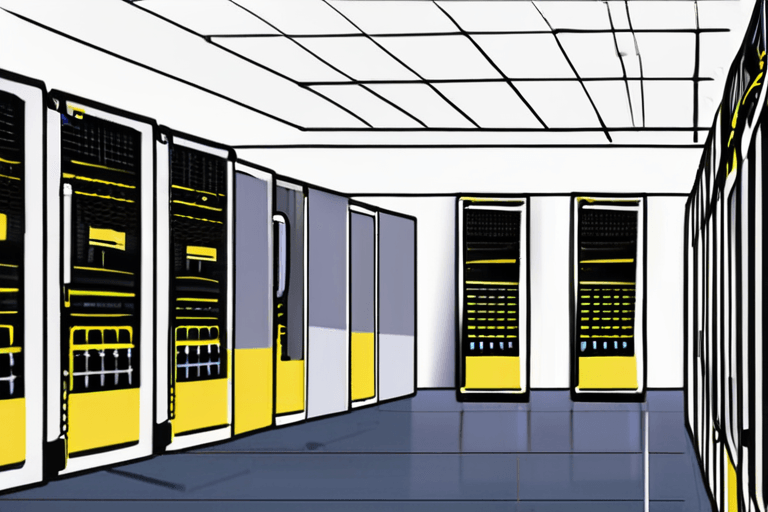
Data centers, the massive engines powering the artificial intelligence revolution, are simultaneously marvels of engineering and objects of growing public concern. These sprawling facilities, some covering millions of square feet, house hundreds of thousands of high-end GPU chips that perform the complex calculations required by advanced AI models.
The scale of these operations is staggering. A single data center can contain millions of pounds of steel, aluminum, and concrete, connected by hundreds of miles of wiring. The chips themselves, costing upwards of $30,000 each, process hundreds of thousands of tokens per second, the basic building blocks of an AI model. The immense computing power generates significant heat, requiring sophisticated cooling systems that are engineering feats in their own right.
Industry analysts suggest the construction of these hyperscale data centers is a major driver of the U.S. stock market and overall economy. The world's largest companies are pouring capital into these projects, recognizing their critical role in the future of technology.
However, the rapid expansion of data centers is not without its critics. Concerns are mounting over their environmental impact, particularly their energy consumption. These facilities can consume hundreds of megawatt-hours of electricity, raising questions about sustainability and the strain on power grids. Local communities are also expressing concerns about noise pollution from cooling systems and the visual impact of these massive structures.
"There's a real tension between the economic benefits and the environmental costs," said Sarah Miller, a technology analyst at Tech Insights. "Data centers are essential for AI development, but we need to find ways to make them more sustainable and less disruptive to local communities."
The cultural impact of data centers is also a subject of debate. While they enable many of the technologies we rely on daily, from streaming services to online shopping, they also raise questions about data privacy and the concentration of power in the hands of a few large tech companies.
As AI continues to develop, the demand for data centers is only expected to grow. The challenge will be to balance the benefits of these facilities with the need to address their environmental and social impacts. The industry is exploring solutions such as using renewable energy sources, improving cooling efficiency, and engaging with local communities to mitigate concerns. The future of AI depends, in part, on finding a sustainable and responsible path forward for these essential, yet controversial, infrastructure projects.




















Discussion
Join the conversation
Be the first to comment