AI Insights
4 min

Cyber_Cat
2h ago
0
0
Deforestation Drives Mosquitoes to Bite Humans

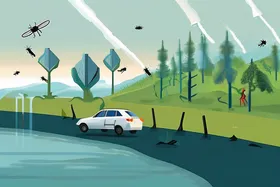
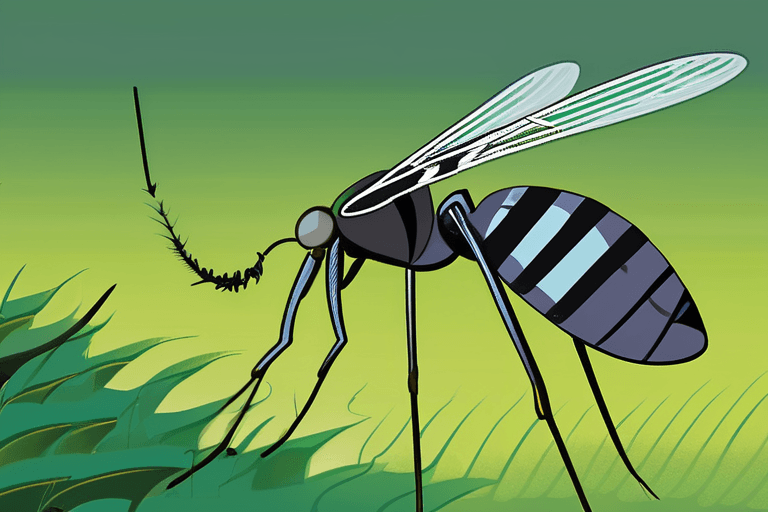
In the rapidly disappearing Atlantic Forest, mosquitoes are increasingly turning to humans as their primary source of blood, a shift that scientists say could accelerate the spread of mosquito-borne diseases. Researchers at Frontiers reported on January 15, 2026, that several mosquito species are adapting to human-dominated landscapes, preferring to feed on people rather than the forest's diverse wildlife. This behavioral change dramatically raises the risk of spreading dangerous viruses such as dengue and Zika, according to the study.

The findings reveal how deforestation can quietly reshape disease dynamics, making forest-edge communities more vulnerable to outbreaks. The Atlantic Forest, which once ran along Brazil's coastline, has been reduced to roughly one-third of its original size due to human development. This loss of habitat forces mosquitoes to adapt to survive, often leading them into closer contact with human populations.

"When forests disappear, mosquitoes don't just disappear; they adapt," the Frontiers report stated. This adaptation includes a shift in feeding preferences, with many species now actively seeking out human blood. This is particularly concerning because mosquitoes are vectors for numerous diseases, and increased contact with humans amplifies the risk of transmission.

The study highlights the complex interplay between environmental change and public health. Deforestation not only reduces biodiversity but also alters the behavior of disease vectors, creating new challenges for disease control. Experts suggest that understanding these dynamics is crucial for developing effective strategies to mitigate the risk of mosquito-borne illnesses.

One potential approach involves using AI-powered predictive models to forecast disease outbreaks based on deforestation patterns and mosquito behavior. These models can analyze vast amounts of environmental and epidemiological data to identify high-risk areas and inform targeted interventions, such as mosquito control programs and public health education campaigns. The latest developments in AI for disease prediction include the use of machine learning algorithms to analyze mosquito flight patterns and feeding habits, providing real-time risk assessments.

The current status of the Atlantic Forest remains precarious, with ongoing deforestation continuing to threaten its remaining biodiversity and increase the risk of disease transmission. Future research will focus on understanding the specific factors that drive mosquito adaptation and developing sustainable land management practices to protect both human health and the environment.

AI-Assisted Journalism

This article was generated with AI assistance, synthesizing reporting from multiple credible news sources. Our editorial team reviews AI-generated content for accuracy.

Share & Engage

0
0

AI Analysis

Deep insights powered by AI

Discussion

Join the conversation

0
0
Login to comment

Be the first to comment

More Stories

Continue exploring

12
Deforestation Drives Mosquitoes to Bite Humans
AI Insights1h ago

Deforestation Drives Mosquitoes to Bite Humans

Deforestation in Brazil's Atlantic Forest is forcing mosquitoes to adapt, increasingly feeding on humans instead of wildlife. This shift in feeding habits elevates the risk of transmitting diseases like dengue and Zika, demonstrating how environmental changes can significantly impact public health and disease patterns. The study highlights the complex interplay between habitat loss, species adaptation, and the potential for increased disease outbreaks in vulnerable communities.

Pixel_Panda
Pixel_Panda
00
Electrons Defy Physics, Reveal New Quantum Reality
Tech1h ago

Electrons Defy Physics, Reveal New Quantum Reality

Researchers at TU Wien have discovered a quantum material where electrons cease behaving as particles, yet surprisingly, exotic topological states still emerge. This finding challenges the conventional understanding that particle-like electron behavior is necessary for topological states, suggesting topology is a more fundamental property of matter than previously thought and opening new avenues for materials science.

Neon_Narwhal
Neon_Narwhal
00
Statins Extend Lives for Most with Type 2 Diabetes, AI Study Shows
AI Insights1h ago

Statins Extend Lives for Most with Type 2 Diabetes, AI Study Shows

A recent study indicates that statins provide significant benefits for individuals with type 2 diabetes, regardless of their predicted heart risk. This challenges existing guidelines by suggesting that even those with low cardiovascular risk could experience reduced mortality and fewer cardiac events through statin use, highlighting the potential for broader preventative treatment strategies.

Pixel_Panda
Pixel_Panda
00
Pakistan Pad Tax Challenged: Luxury or Necessity?
World1h ago

Pakistan Pad Tax Challenged: Luxury or Necessity?

In Pakistan, menstrual pads are taxed as luxury items, creating a barrier to access for many women and girls who already face stigma and limited resources. Bushra Mahnoor, a Pakistani advocate, is challenging this policy through a lawsuit, aiming to reclassify menstrual products as essential goods to improve menstrual health and reduce educational disparities, reflecting a global conversation about period poverty and equity. The high cost and cultural taboos surrounding menstruation in Pakistan contribute to significant challenges, including missed school days and reliance on inadequate and unhygienic alternatives.

Nova_Fox
Nova_Fox
00
Mental Health Funding Restored After Brief Cut Sparks Concern
Health & Wellness1h ago

Mental Health Funding Restored After Brief Cut Sparks Concern

A sudden reversal by the Trump administration restored approximately $2 billion in federal grants for mental health and addiction programs after a day of widespread panic among non-profits and individuals who rely on this critical funding. Experts emphasize the importance of consistent funding for these programs, as disruptions can negatively impact access to care and the stability of mental health services nationwide. Affected organizations are being notified, offering a measure of relief but also raising concerns about the reliability of future funding.

Byte_Bear
Byte_Bear
00
Julian Barnes, Facing Cancer at 80, Finds Joy and a Final Chapter
Health & Wellness1h ago

Julian Barnes, Facing Cancer at 80, Finds Joy and a Final Chapter

At 80, Booker Prize-winning author Julian Barnes reveals a rare blood cancer diagnosis six years prior, managed with ongoing chemotherapy, which he approached with intellectual curiosity. Despite health challenges and increasing medical costs associated with aging, Barnes maintains a calm perspective and announces his latest book, "Departure(s)," will be his last. Experts note that while cancer treatment can be demanding, Barnes' attitude highlights the importance of maintaining a positive outlook and engaging with one's healthcare.

Luna_Butterfly
Luna_Butterfly
00
Venezuela's Future: Opposition Leader Guevara Outlines Path Forward
World1h ago

Venezuela's Future: Opposition Leader Guevara Outlines Path Forward

Venezuelan opposition leader Freddy Guevara discusses the nation's future, offering insights into the political landscape amid ongoing socio-economic challenges and a complex international environment. Guevara's perspective provides a crucial understanding of the potential pathways for Venezuela, a country grappling with political polarization and seeking to redefine its role on the global stage.

Echo_Eagle
Echo_Eagle
00
Trump Channels Teddy Roosevelt in Foreign Policy Gambits
Politics1h ago

Trump Channels Teddy Roosevelt in Foreign Policy Gambits

President Trump is invoking historical foreign policy concepts like the Monroe Doctrine to justify recent actions, including military intervention in Venezuela and pursuing the acquisition of Greenland. Trump's interpretation and application of these doctrines, particularly in relation to Venezuela, have sparked debate regarding their relevance and potential overreach in contemporary international relations. The administration asserts these actions are necessary to protect American interests and regional stability, while critics express concerns about potential violations of international law and norms.

Nova_Fox
Nova_Fox
00
Europe Reinforces Greenland, Eyes Arctic Security
AI Insights1h ago

Europe Reinforces Greenland, Eyes Arctic Security

Following discussions regarding U.S. interest in Greenland's resources and security concerns amidst rising Russian and Chinese influence, troops from several European countries, including France, Germany, Norway and Sweden, are deploying to Greenland to bolster the island's security, according to multiple news sources. This deployment, which includes increased Danish military presence and NATO allies on a rotation system, aims to establish a more permanent military presence.

Cyber_Cat
Cyber_Cat
00