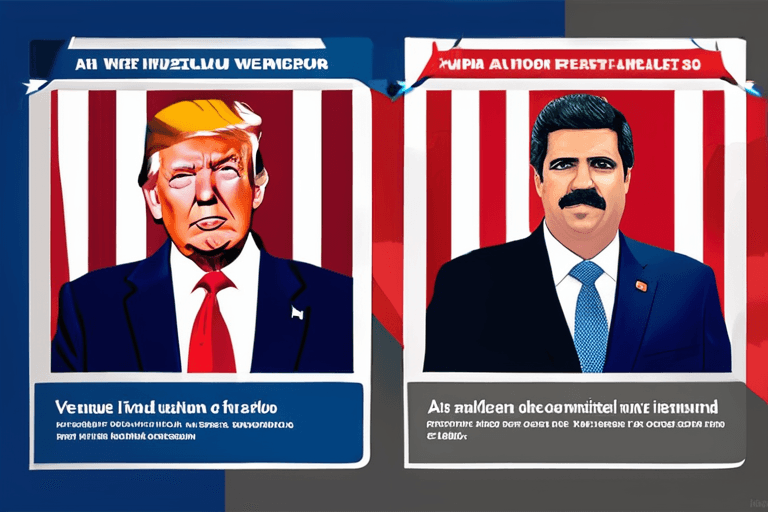
Donald Trump is scheduled to host María Corina Machado, the Venezuelan opposition leader and 2025 Nobel Peace Prize laureate, at the White House on Thursday to discuss the future of Venezuela following the U.S. capture of Nicolás Maduro. The meeting comes after an elite U.S. military team seized Maduro in a pre-dawn raid on January 3 and transported him to a New York City jail.
The talks are considered high-stakes, given the complex political landscape in Venezuela and the ongoing power vacuum created by Maduro's removal. Many observers, both within Venezuela and internationally, had anticipated Machado would assume leadership after Maduro's capture. However, the White House has largely sidelined Machado, instead recognizing Maduro's former vice-president, Delcy Rodríguez, as Venezuela's interim leader, even as Trump maintains that the U.S. will oversee the country's transition.
Venezuela has been mired in a deep political and economic crisis for years, marked by hyperinflation, shortages of basic goods, and widespread emigration. Maduro's socialist government faced accusations of authoritarianism and human rights abuses, leading to international condemnation and sanctions. The opposition, led by figures like Machado, has struggled to unite and effectively challenge Maduro's grip on power.
The U.S. involvement in Venezuela's affairs has a long and complex history, dating back to the Cold War era. The country possesses the world's largest proven oil reserves, making it a strategic interest for the United States. Washington has historically supported opposition movements and imposed sanctions on the Maduro regime in an effort to promote democracy and stability.
The decision to recognize Rodríguez as interim leader, despite Machado's widespread support and Nobel Peace Prize, has drawn criticism from some quarters. It is seen by some as a betrayal of democratic principles and a move that could further destabilize the country. The upcoming meeting between Trump and Machado is therefore viewed as a crucial opportunity to clarify the U.S. position and chart a path forward for Venezuela.
Adding to the complexity, Félix Plasencia, Venezuela's ambassador to the UK and a close ally of Rodríguez, is also expected to arrive in Washington on Thursday for meetings. The simultaneous presence of Machado and a representative of the interim government underscores the delicate balancing act the U.S. is attempting to maintain in navigating Venezuela's future. The outcome of these discussions could have significant implications for the country's political stability, economic recovery, and its relationship with the international community.














Discussion
Join the conversation
Be the first to comment