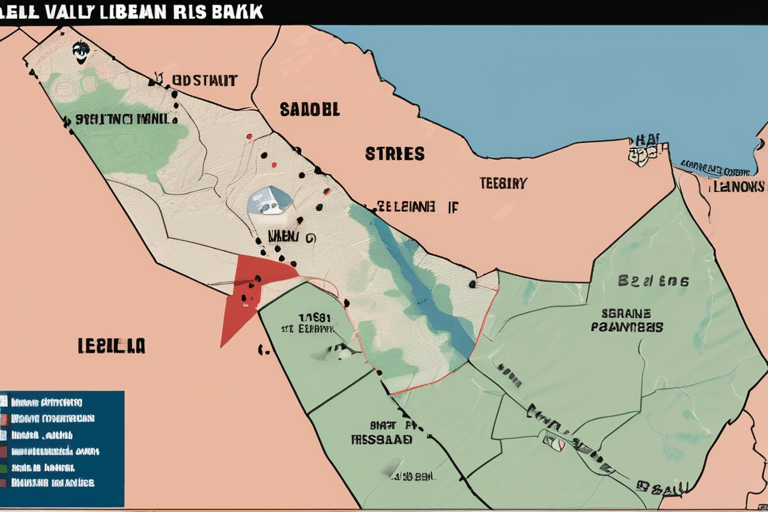
Israeli military forces attacked a village in Lebanon's Bekaa Valley, according to local media reports, raising fears of a broader Israeli escalation amid government pressure to disarm Hezbollah. The attack occurred Thursday, following a social media post by Israeli army spokesman Avichay Adraee instructing residents of Sohmor to evacuate their homes in anticipation of a strike on a building allegedly housing Hezbollah military infrastructure.
The Israeli military subsequently stated it was targeting multiple Hezbollah sites throughout Lebanon, though specific locations of the strikes were not disclosed. The attacks come amid heightened tensions and increasing exchanges of fire between Israeli forces and Hezbollah along the Lebanese-Israeli border.
The situation is unfolding against a backdrop of growing concerns about a potential wider conflict. The Israeli government has repeatedly stated its determination to neutralize Hezbollah's military capabilities, viewing the group's presence and arsenal as a significant threat to its national security. Hezbollah, a Shia Islamist political party and militant group, wields considerable influence in Lebanon and has a long history of conflict with Israel.
The Bekaa Valley, where Sohmor is located, is a fertile agricultural region in eastern Lebanon. While traditionally not a primary site of conflict, its proximity to the border and reported presence of Hezbollah elements make it a potential target in the escalating tensions.
The recent attacks follow a series of earlier incidents, including reported Israeli strikes on southern Lebanon and claims of casualties on both sides. These events have fueled anxieties among the Lebanese population, with many fearing a repeat of the devastating 2006 Lebanon War.
The United States has urged de-escalation and diplomatic solutions to the crisis. However, regional analysts suggest that the current trajectory points towards a further escalation, with potentially severe consequences for both Lebanon and Israel. The situation remains fluid, and the international community is closely monitoring developments in the region.



















Discussion
Join the conversation
Be the first to comment