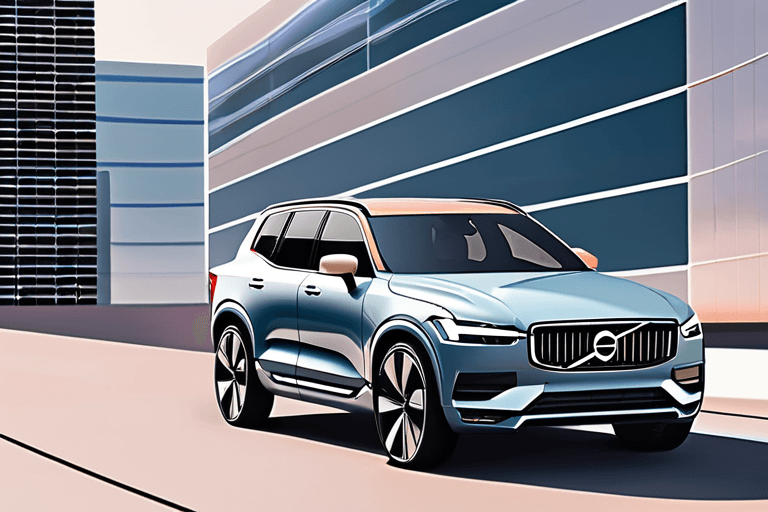
Imagine a future where your car anticipates your needs, learns your preferences, and seamlessly integrates into your digital life. That future is closer than you think, and Volvo is betting big on Google's Gemini to help bring it to life. Next week, the Swedish automaker unveils its highly anticipated EX60 SUV, an all-electric marvel built on a revolutionary platform that promises to redefine the driving experience. But beneath the sleek exterior and cutting-edge design lies a sophisticated brain powered by artificial intelligence, specifically, Google's Gemini.
Volvo's embrace of AI is more than just a tech trend; it's a fundamental shift in how the company designs and engineers its vehicles. The EX60 is built upon HuginCore, a new software-defined platform named after one of Odin's ravens in Norse mythology. This platform represents a radical departure from traditional automotive architecture, consolidating various electronic control units (ECUs) into a handful of powerful computers capable of performing over 250 trillion operations per second. This centralized approach allows for greater efficiency, enhanced performance, and, crucially, the ability to seamlessly integrate advanced AI capabilities.
The HuginCore platform, with Gemini at its heart, is designed to collect and process vast amounts of data from the vehicle's sensors and the surrounding environment. This data is then used to personalize the driving experience, optimize performance, and enhance safety features. Think of it as having a co-pilot that is constantly learning and adapting to your individual needs and driving style.
"He sent Hugin and Muninn out to fly across the realms and observe and gather information and knowledge, which they then share with Odin that enabled him to make the right decisions as the ruler of Asgard," explains Alwin Bakkenes, head of global software engineering at Volvo Cars. "And much like Hugin, the way we look at this technology platform, it collects information from…" Bakkenes trails off, hinting at the vast potential of the system.
The integration of Gemini into Volvo's vehicles has significant implications for the automotive industry. It signifies a move towards software-defined vehicles, where software and AI play a central role in shaping the driving experience. This shift allows for continuous improvement and innovation through over-the-air updates, meaning your car can get better over time.
The EX60 itself is a testament to Volvo's commitment to innovation. Built on an EV-only platform, it incorporates advanced features such as a cell-to-body battery pack and large weight-saving castings. These design choices contribute to improved efficiency, range, and overall performance.
Volvo's decision to partner with Google and integrate Gemini into its vehicles is a bold move that positions the company at the forefront of automotive innovation. By embracing AI and software-defined architecture, Volvo is not only creating more intelligent and personalized vehicles but also paving the way for a future where cars are seamlessly integrated into our digital lives. The EX60 is just the beginning, and the future of driving looks brighter and more intelligent than ever before.



















Discussion
Join the conversation
Be the first to comment