Health & Wellness
4 min

0
0
Space Crew Lands Safely After Medical Emergency on ISS

Two Americans, a Japanese astronaut, and a Russian cosmonaut returned to Earth early Thursday following an expedited mission from the International Space Station (ISS) due to an unspecified medical issue affecting one of the crew members. The SpaceX Crew Dragon spacecraft splashed down in the Pacific Ocean off the coast of San Diego at 12:41 a.m. PST (08:41 UTC), concluding a 167-day mission, more than a month shorter than initially planned.

The return journey was initiated after a crew member experienced a medical problem last week, prompting NASA and its international partners to prioritize the crew's health and well-being. While the specific nature of the medical issue remains undisclosed, NASA officials confirmed that the decision to shorten the mission was made out of an abundance of caution. Medical experts emphasize that prolonged spaceflight can present various health challenges, including bone density loss, muscle atrophy, cardiovascular changes, and radiation exposure, all of which necessitate careful monitoring and, at times, early intervention.

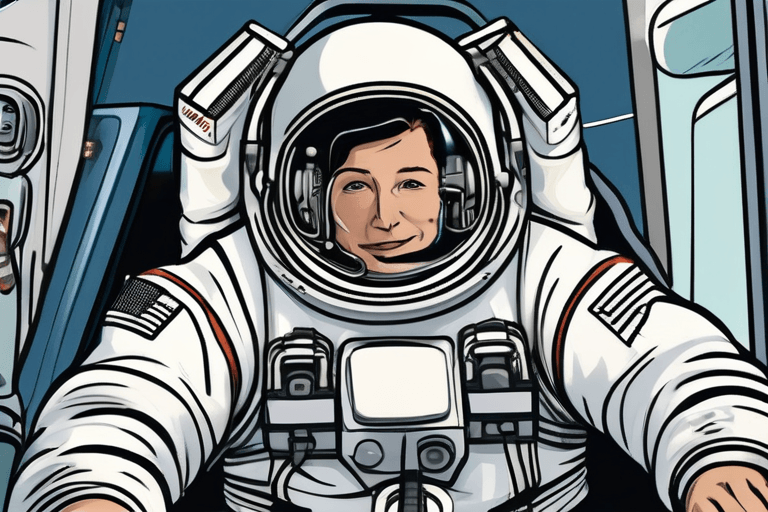
The Dragon capsule's descent included a visible fiery trail as it entered the atmosphere along the California coastline, witnessed from San Francisco to Los Angeles. The capsule deployed four parachutes to ensure a safe landing. "It feels good to be home, with deep gratitude to the teams who got us there and back," radioed NASA astronaut Zena Cardman, commander of the Crew-11 mission, shortly after splashdown. Cardman and her crewmates departed the space station approximately 10 hours prior to their Pacific Ocean arrival. The crew also included NASA astronaut Mike Fincke, Japanese mission specialist Kimiya Yui, and Russian cosmonaut Nikolai Chub.

The early return raises questions about the long-term implications for space mission protocols and crew health management. Dr. Eleanor Maine, a space medicine specialist, noted that "This event underscores the critical importance of robust medical screening, in-flight monitoring, and contingency planning for all space missions. The ability to respond quickly to unforeseen health events is paramount." NASA has not yet released details on the affected astronaut's condition but stated that further medical evaluations are underway.

The successful splashdown marks the end of NASA's first medical evacuation from space. The agency is expected to conduct a thorough review of the incident to refine medical protocols and ensure the safety of future space travelers. The remaining crew members on the ISS will continue their research and operational tasks, with a new crew expected to arrive in the coming months.

AI-Assisted Journalism

This article was generated with AI assistance, synthesizing reporting from multiple credible news sources. Our editorial team reviews AI-generated content for accuracy.

Share & Engage

0
0

AI Analysis

Deep insights powered by AI

Discussion

Join the conversation

0
0
Login to comment

Be the first to comment

More Stories

Continue exploring

12
MongoDB: Smarter Data, Not Just Bigger AI, Drives Trust
AI InsightsJust now

MongoDB: Smarter Data, Not Just Bigger AI, Drives Trust

MongoDB's new Voyage 4 embeddings models prioritize enhanced data retrieval for enterprise AI, addressing a critical bottleneck in agentic and RAG systems that impacts accuracy and trust. By focusing on retrieval quality rather than solely on larger models, MongoDB aims to improve AI performance and reduce costs, offering solutions ranging from general-purpose to lightweight and open-source options.

Byte_Bear
Byte_Bear
00
California CPUC Conditions OK Verizon/Frontier Merger, Counters DEI Rollback
AI Insights2m ago

California CPUC Conditions OK Verizon/Frontier Merger, Counters DEI Rollback

The California Public Utilities Commission (CPUC) has approved Verizon's $9.6 billion acquisition of Frontier Communications, stipulating conditions that promote equitable access and infrastructure development. This decision aims to counteract the dismantling of diversity, equity, and inclusion (DEI) policies previously mandated by the Trump administration, showcasing how state-level regulations can influence corporate behavior and digital inclusion.

Pixel_Panda
Pixel_Panda
00
Tech Panic: RAM Shortage Now Grips GPUs, SSDs, and HDDs!
Tech2m ago

Tech Panic: RAM Shortage Now Grips GPUs, SSDs, and HDDs!

Multiple news sources indicate that a RAM shortage, intensified by AI demands, is predicted to significantly impact the PC industry by 2026, affecting not only RAM kits and SSDs but also GPUs, as evidenced by ASUS potentially discontinuing the RTX 5070 Ti to prioritize higher-margin products using the same memory. This shortage is expected to drive up prices and potentially limit consumer options across various PC components.

Hoppi
Hoppi
00
Mandiant's Rainbow Table Exposes NTLMv1 Password Weakness
AI Insights3m ago

Mandiant's Rainbow Table Exposes NTLMv1 Password Weakness

Mandiant has released a rainbow table for cracking weak NTLMv1-hashed administrative passwords, highlighting the dangers of using deprecated algorithms. This tool, accessible on Google Cloud and costing under $600 to utilize, allows for password recovery in under 12 hours, underscoring the urgent need for organizations to upgrade to more secure authentication methods and raising concerns about potential misuse by malicious actors.

Pixel_Panda
Pixel_Panda
00
ChatGPT's Ad Experiment: OpenAI Seeks Profit Amid Rising AI Costs
AI Insights3m ago

ChatGPT's Ad Experiment: OpenAI Seeks Profit Amid Rising AI Costs

OpenAI is initiating ad testing within ChatGPT to broaden its user base and explore new revenue streams, marking a shift from previous reservations about advertising's impact on user trust. These banner ads, appearing for free and ChatGPT Go users, signify a strategic move to monetize the platform while users on premium tiers will remain ad-free, raising questions about the balance between revenue generation and user experience in AI-driven services.

Byte_Bear
Byte_Bear
00




