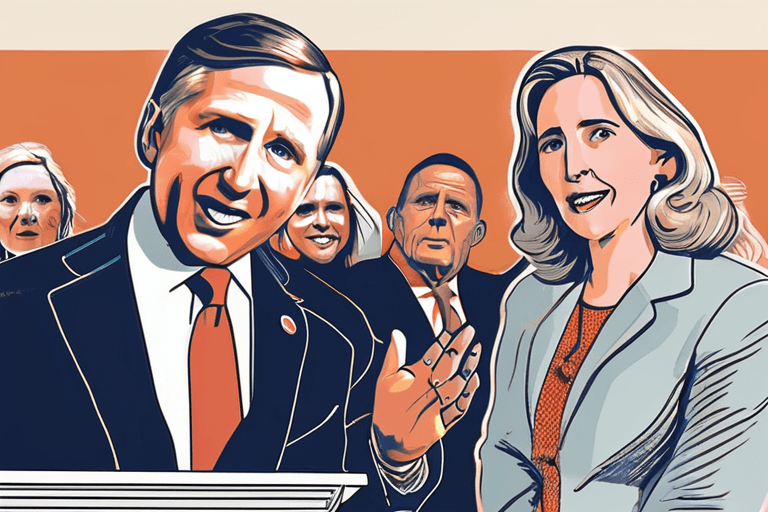
For 75 gubernatorial terms, Virginia's highest office remained a male domain, a streak etched in tradition and tailored morning suits. But this Saturday, the Old Dominion will witness a seismic shift. Abigail Spanberger, the governor-elect, is poised to shatter that glass ceiling, stepping into the role not just as a leader, but as a symbol of evolving times.
Virginia's gubernatorial inaugurations are steeped in ritual. The state's protocol guide meticulously details the proceedings: the outdoor swearing-in, the three-piece morning suits donned by the outgoing governor and attending dignitaries, the booming 19-gun salute, and the roaring jet flyby. Then, almost as an afterthought, the guide notes the silent transition: state employees preparing the Governor's Office for its new occupant. This year, however, the transition is anything but silent.
Spanberger's victory represents more than just a change in leadership; it signifies a profound shift in societal attitudes and political landscapes. For decades, the path to the governor's mansion was paved with obstacles for women. Implicit biases, fundraising challenges, and the persistent perception of leadership as a masculine trait all contributed to the long wait. Now, with the aid of rapidly advancing AI tools that can analyze voter sentiment and predict election outcomes with increasing accuracy, campaigns are becoming more data-driven and less reliant on outdated assumptions.
AI is playing an increasingly significant role in modern elections. Sophisticated algorithms can identify key demographics, tailor messaging to resonate with specific voter groups, and even predict voter turnout with remarkable precision. This technology allows campaigns to allocate resources more effectively, target undecided voters, and ultimately, level the playing field for candidates from underrepresented groups.
"AI is not a crystal ball, but it's a powerful lens," explains Dr. Anya Sharma, a political science professor specializing in AI and elections. "It can help us see patterns and trends that might otherwise be invisible, allowing campaigns to make more informed decisions. For instance, AI can analyze social media data to gauge public sentiment towards a candidate, identify areas where they are strong or weak, and suggest strategies for improving their image."
However, the rise of AI in politics also raises ethical concerns. The potential for misuse, such as the spread of misinformation or the manipulation of voters through targeted advertising, is a real threat. Safeguards and regulations are needed to ensure that AI is used responsibly and ethically in the political arena.
Spanberger herself acknowledges the transformative potential of AI while remaining cautious about its implications. "Technology can be a powerful tool for progress, but it's crucial that we use it wisely," she stated during a recent interview. "We need to ensure that AI is used to empower voters, not to manipulate them. Transparency and accountability are essential."
As Spanberger prepares to take office, she carries the weight of history on her shoulders. She is not just the 76th governor of Virginia; she is the first woman to hold the position. Her inauguration will be a moment of celebration, a testament to the progress that has been made, and a reminder of the work that still needs to be done. As the 19-gun salute echoes across the Capitol grounds, it will be a sound of tradition, yes, but also a fanfare for a new era in Virginia politics, an era where the possibilities are as limitless as the algorithms that helped pave the way.


















Discussion
Join the conversation
Be the first to comment