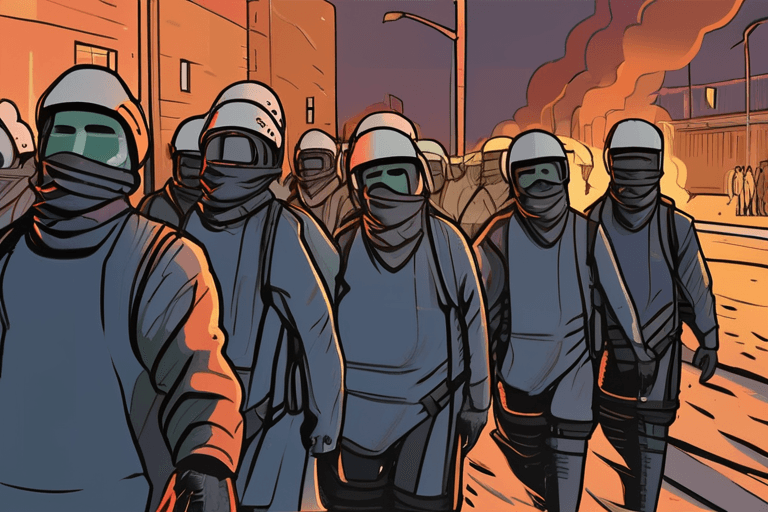
Protests in Iran intensified this past week, met with a government-imposed internet blackout, increased state violence, and escalating rhetoric that labeled demonstrators as terrorists and saboteurs. The exact death toll remains unclear amid the unrest, which coincides with heightened tensions between Iran and the United States, marking one of the most significant political upheavals in the country in recent years.
The Iranian government's response included a near-total shutdown of internet access, a tactic previously employed to suppress dissent and control the flow of information during periods of unrest. Tohid Asadi, a correspondent for Al Jazeera English, noted that this blackout severely hampered the ability of protesters to organize and share information, while simultaneously limiting the outside world's ability to monitor the situation on the ground.
The surge in violence followed the government's increasingly harsh rhetoric. Narges Bajoghli, an Assistant Professor at Johns Hopkins University, explained that the state's labeling of protesters as "terrorists" served to legitimize the use of force against them in the eyes of security forces and some segments of the population. This framing echoes previous instances where the Iranian government has sought to delegitimize opposition movements by associating them with foreign adversaries or violent extremism.
The current unrest occurs against a backdrop of economic hardship and social discontent in Iran. Years of international sanctions, coupled with internal economic mismanagement, have contributed to high inflation, unemployment, and a decline in living standards. Roxane Farmanfarmaian, a Lecturer at the University of Cambridge, pointed out that these economic grievances have fueled widespread frustration, particularly among younger Iranians who feel they have limited opportunities for advancement.
The timing of the protests also coincides with renewed tensions between Iran and the United States over Iran's nuclear program and its regional activities. The collapse of the 2015 nuclear deal, formally known as the Joint Comprehensive Plan of Action (JCPOA), under the Trump administration and the subsequent reimposition of sanctions have further strained Iran's economy and fueled anti-government sentiment. Farzan Sabet, Managing Researcher at the Global Governance Centre, suggested that the external pressure from the U.S. has emboldened hardliners within the Iranian government, leading to a more repressive response to domestic dissent.
The international community has expressed concern over the violence and the internet blackout. Human rights organizations have called on the Iranian government to respect the rights of protesters and to restore internet access. The United States has condemned the government's crackdown and has vowed to hold Iranian officials accountable for human rights abuses. The situation remains fluid, with the potential for further escalation both internally and externally. The coming days and weeks will be critical in determining the trajectory of the protests and the future of Iran's relationship with the world.
















Discussion
Join the conversation
Be the first to comment