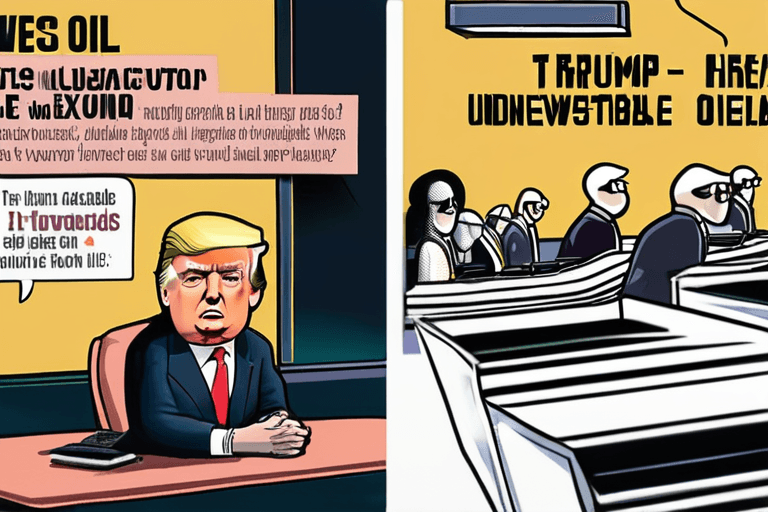
President Donald Trump indicated he might exclude Exxon Mobil from future investments in Venezuela, citing CEO Darren Woods's assessment that the country is currently "uninvestable." Trump's statement, made to reporters on Sunday, followed Woods's remarks at a White House event earlier this month.
The disagreement highlights a fundamental conflict between the Trump administration's energy policy and the financial strategies of major U.S. oil companies. Trump has repeatedly stated his desire for U.S. oil companies to invest $100 billion in Venezuela following the removal of President Nicolás Maduro, aiming to boost the country's oil production and stabilize global oil prices. However, oil executives are prioritizing shareholder returns and risk mitigation in an environment of oversupply.
Vicki Hollub, the chief executive of Occidental Petroleum, echoed this sentiment, stating, "We’re not going to aggressively put lots of extra barrels into an oversupplied market." This cautious approach reflects the industry's broader strategy of economizing on investment and rewarding shareholders through dividends and share repurchases.
The current impasse leaves the future of U.S. oil investment in Venezuela uncertain. Trump faces the challenge of either incentivizing investment or potentially penalizing companies for their reluctance. The conflicting priorities of the administration and the oil industry will ultimately shape the outcome. The situation unfolds against a backdrop of fluctuating oil prices and a global market grappling with oversupply, making investment decisions particularly sensitive for major oil companies.
















Discussion
Join the conversation
Be the first to comment