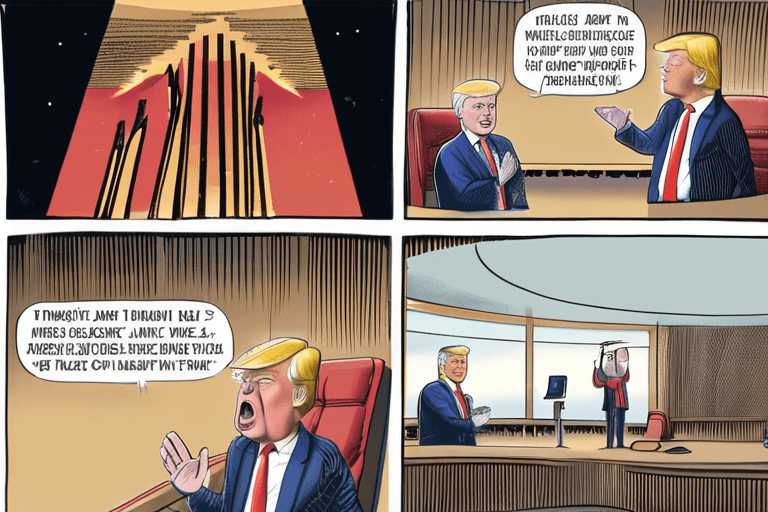
Norway's Prime Minister Jonas Gahr Støre criticized former U.S. President Donald Trump for suggesting a link between Norway's Nobel Peace Prize decisions and Trump's interest in acquiring Greenland. Støre stated that Trump texted him indicating that because Norway did not award him the Nobel Peace Prize, he felt less obligated to prioritize peace, reiterating his desire for the U.S. to control Greenland.
Støre emphasized that the Nobel Peace Prize is awarded by an independent committee, separate from the Norwegian government. "The Nobel Committee operates autonomously," Støre said. "Political influence plays no role in their selection process."
The incident highlights ongoing concerns about the intersection of political influence and automated decision-making, even in seemingly unrelated domains. While the Nobel Committee's selection process is not explicitly AI-driven, the broader context involves the increasing use of algorithms in various sectors, raising questions about bias and transparency. AI systems, trained on historical data, can inadvertently perpetuate existing societal biases, leading to skewed outcomes. This is a critical area of research and development, with efforts focused on creating "fair AI" that mitigates these risks.
The discussion also touches upon the evolving role of AI in international relations. While no AI was directly involved in the exchange between Støre and Trump, AI-powered tools are increasingly used for sentiment analysis, threat detection, and even diplomatic communication. The potential for misinterpretation or manipulation of these tools raises significant concerns about their impact on global stability.
The Norwegian Nobel Committee, established in 1901, selects the Nobel Peace Prize laureate annually. The committee consists of five members appointed by the Norwegian Parliament. The selection process is confidential, and the committee's decisions are final.
As of today, there have been no further statements from either Støre or Trump regarding the matter. The incident serves as a reminder of the complexities surrounding AI ethics and the importance of maintaining transparency and accountability in all areas of technological development. Future developments will likely focus on establishing clearer guidelines for the use of AI in sensitive sectors and promoting greater public awareness of the potential risks and benefits of these technologies.


















Discussion
Join the conversation
Be the first to comment