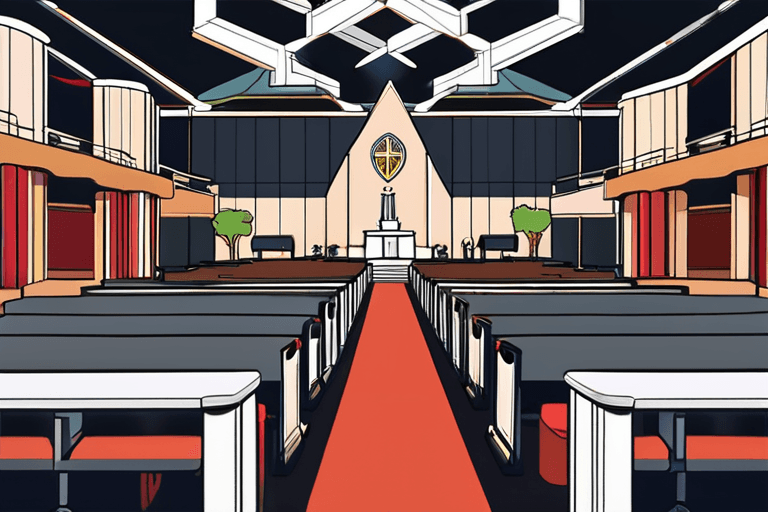
The stained-glass windows of Cities Church in St. Paul, Minnesota, usually filter sunlight into serene patterns. But recently, the tranquility was shattered. A wave of protesters, chanting "ICE out!" and "Justice for Renee Good," disrupted a Sunday service, igniting a firestorm of controversy that has reached the highest levels of the U.S. Department of Justice. At the heart of the uproar lies a complex intersection of faith, immigration enforcement, and accusations of civil rights violations, all amplified by the pervasive reach of social media.
The catalyst for the protests was the fatal shooting of Renee Good, a 37-year-old mother of three, by an ICE agent in Minneapolis. Her death occurred amidst a backdrop of heightened federal immigration enforcement activities, sparking outrage among activists who claim these operations are characterized by violent tactics and unlawful arrests. Black Lives Matter Minnesota, one of the organizing groups, livestreamed the church disruption on Facebook, bringing the conflict into the digital sphere and amplifying its reach far beyond the church walls.
The protesters' central allegation is that David Easterwood, a pastor at Cities Church, simultaneously leads the local ICE field office, overseeing the very operations they decry. This alleged dual role has fueled accusations of hypocrisy and conflict of interest, turning the church into a focal point of their protests. The situation has quickly escalated, prompting a formal investigation by the U.S. Department of Justice. Assistant Attorney General Harmeet Dhillon stated that the agency is investigating potential federal civil rights violations, emphasizing that "a house of worship is not a public forum for your protest! It is a space protected from exactly such acts by federal criminal and civil laws."
This incident raises profound questions about the boundaries of protest, the separation of church and state, and the role of individuals who hold positions of authority in both religious and governmental institutions. The use of livestreaming technology by Black Lives Matter Minnesota also highlights the increasing role of AI-powered algorithms in shaping public discourse. These algorithms, designed to maximize engagement, can inadvertently amplify divisive content, potentially exacerbating tensions and contributing to the spread of misinformation. The algorithms learn from user interactions, creating echo chambers where individuals are primarily exposed to information that confirms their existing beliefs. This can lead to increased polarization and make constructive dialogue more difficult.
"The algorithms are not neutral arbiters of truth," explains Dr. Anya Sharma, a professor of computational ethics at the University of Minnesota. "They are designed to optimize for specific goals, such as user engagement or advertising revenue. This can have unintended consequences, such as the amplification of hate speech or the spread of conspiracy theories."
The DOJ's investigation will likely hinge on determining whether the protesters violated any federal laws protecting religious freedom and whether their actions constituted a legitimate form of protest or an unlawful disruption of religious services. The case also underscores the growing tension between law enforcement and communities of color, particularly in the context of immigration enforcement.
Looking ahead, this incident serves as a stark reminder of the challenges facing a society grappling with complex issues of immigration, racial justice, and the role of technology in shaping public discourse. The outcome of the DOJ investigation and the subsequent legal proceedings will undoubtedly have significant implications for the future of protest and the protection of religious institutions. Furthermore, it highlights the urgent need for a broader societal conversation about the ethical implications of AI and its potential to exacerbate social divisions. As technology continues to evolve, it is crucial to develop strategies for mitigating its negative impacts and ensuring that it serves as a force for good in society.















Discussion
Join the conversation
Be the first to comment