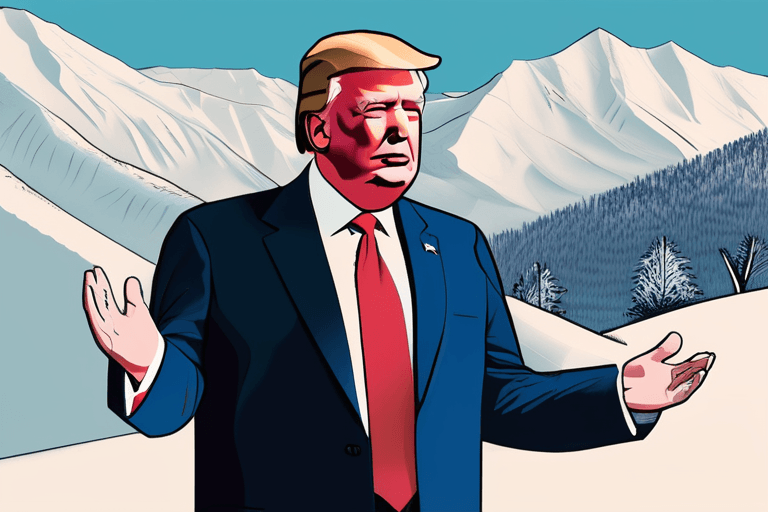
NPR's Eleanor Beardsley reported that the President's attendance comes at a time when global leaders are seeking answers on pressing issues such as the conflicts in Ukraine and Gaza. "President Trump is set to travel to Davos, Switzerland, this week for the World Economic Forum. That's where heads of state and business executives schmooze and make deals," Beardsley said.
The dispute over Greenland highlights a growing divergence in geopolitical strategies between the U.S. and Europe. President Trump's assertive approach, characterized by the threat of economic sanctions, contrasts with the European Union's emphasis on diplomatic solutions and multilateral cooperation. The potential acquisition of Greenland, a self-governing territory within the Kingdom of Denmark, has been met with resistance from European leaders who view it as an infringement on their sovereignty and a destabilizing force in the Arctic region.
The World Economic Forum provided a platform for discussions on these tensions, although the specific outcomes of those discussions remain unclear. The intersection of geopolitics and economics at the forum underscores the interconnectedness of global challenges and the need for collaborative solutions.
The situation remains fluid, with ongoing negotiations between the U.S. and European nations. The future of Greenland and the broader U.S.-European relationship will likely depend on the willingness of both sides to find common ground and address their differences through diplomatic channels.

















Discussion
Join the conversation
Be the first to comment