The integration of advanced technologies into agriculture, often referred to as "tech-dense" farming, is gaining momentum as a potential solution to increase efficiency and sustainability in food production. These farms utilize a range of tools, including sensors, data analytics, robotics, and artificial intelligence, to optimize crop yields, reduce resource consumption, and minimize environmental impact.
One example of this trend is the increasing adoption of precision agriculture techniques. These techniques involve using sensors to monitor soil conditions, weather patterns, and plant health in real-time. The data collected is then analyzed to make informed decisions about irrigation, fertilization, and pest control. "By leveraging data-driven insights, farmers can apply inputs only where and when they are needed, reducing waste and improving overall efficiency," explained Dr. Anya Sharma, an agricultural technology researcher at the University of California, Davis.
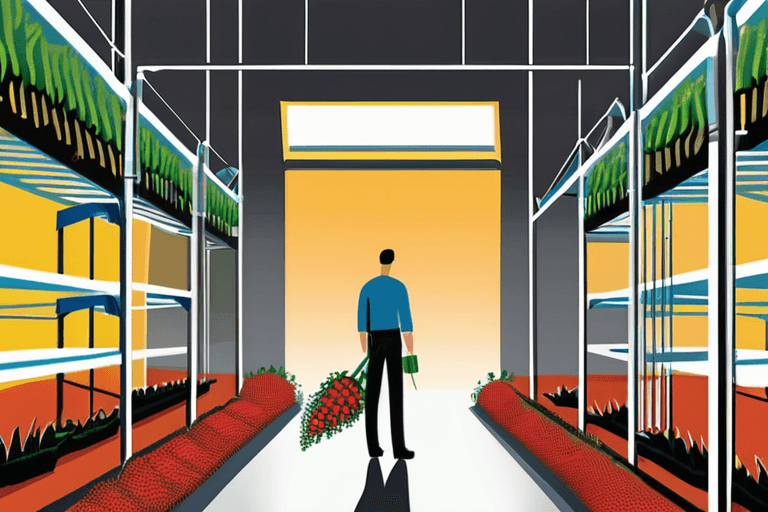
Another area of innovation is the development of agricultural robots. These robots can perform a variety of tasks, such as planting seeds, weeding fields, harvesting crops, and even monitoring livestock. Companies like Iron Ox are developing fully automated indoor farms that use robots to grow produce in a controlled environment. According to Iron Ox CEO Brandon Alexander, "Our goal is to create a more sustainable and efficient food system by automating the entire growing process." Their system uses robotic arms to move plants, sensors to monitor their health, and AI algorithms to optimize growing conditions.
The rise of tech-dense farming is driven by several factors, including the growing global population, increasing demand for food, and concerns about the environmental impact of traditional agriculture. Climate change is also playing a role, as farmers face more unpredictable weather patterns and water scarcity. "Technology can help farmers adapt to these challenges by providing them with the tools they need to manage resources more effectively and improve resilience," said David Miller, an agricultural economist at the USDA.
However, the adoption of tech-dense farming is not without its challenges. The initial investment costs can be high, and farmers may need training to use the new technologies effectively. There are also concerns about data privacy and security, as well as the potential impact on farm labor. "It's important to ensure that these technologies are accessible to all farmers, regardless of their size or location," said Sarah Chen, a policy analyst at the National Farmers Union. "We also need to address the ethical and social implications of automation in agriculture."
Despite these challenges, the trend toward tech-dense farming is expected to continue in the coming years. As technology advances and costs decrease, more farmers are likely to adopt these tools to improve their operations and contribute to a more sustainable food system. The next steps involve further research and development, as well as policy initiatives to support the adoption of these technologies and address the associated challenges.


















Discussion
Join the conversation
Be the first to comment