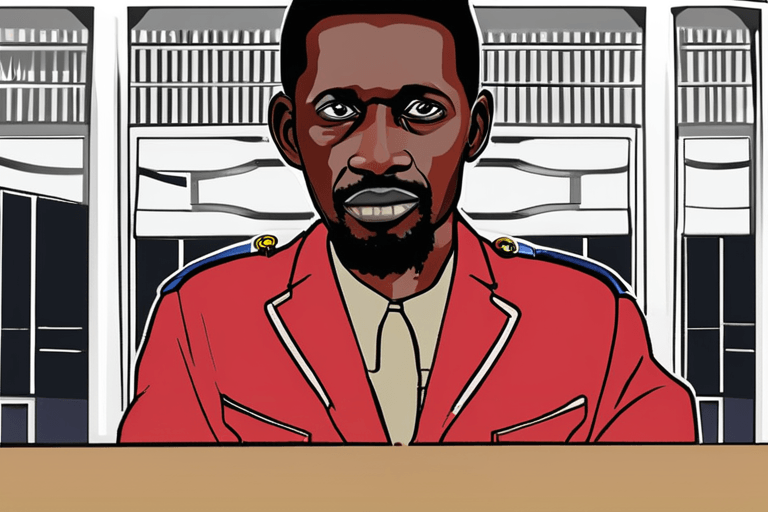
Under the cloak of night, Ugandan opposition leader Bobi Wine slipped away from what he describes as a police raid on his residence, days after a contentious presidential election. Speaking exclusively to Al Jazeera from an undisclosed location, Wine, whose real name is Robert Kyagulanyi Ssentamu, alleges the election was rigged in favor of incumbent President Yoweri Museveni, a claim the government vehemently denies.
Uganda's recent presidential election has been marred by accusations of fraud and irregularities, casting a shadow over the country's democratic process. Museveni, who has been in power for over three decades, secured another term, extending his rule. The election took place amidst a backdrop of heightened political tension, with restrictions on opposition rallies and reports of violence. The government cited the need to maintain security and prevent the spread of COVID-19 as justification for these measures. International observers have expressed concerns about the fairness and transparency of the electoral process, though their access was limited.
Wine's account paints a picture of a tense escape. He claims security forces surrounded his home, preventing him from leaving. Fearing for his safety and that of his family, he made the decision to flee. The details of his escape remain unclear, but his ability to evade authorities underscores the level of support he commands, even within a heavily policed environment. The Ugandan government has not yet issued a detailed statement regarding the alleged raid, but officials have previously accused Wine of inciting violence and attempting to destabilize the country.
"This was not an election," Wine stated in his Al Jazeera interview. "It was a sham. Museveni is clinging to power through force and intimidation." He further asserted that he has evidence of widespread voter fraud, including ballot stuffing and manipulation of results. The Electoral Commission has dismissed these allegations, maintaining that the election was conducted in accordance with Ugandan law.
Political analyst Maria Kiwanuka, speaking from Kampala, suggests the current situation reflects a deeper crisis of governance in Uganda. "The election exposed the deep divisions within Ugandan society," she observes. "While Museveni maintains significant support, particularly in rural areas, Wine's popularity demonstrates a growing desire for change, especially among the youth." Kiwanuka also points to the importance of addressing concerns about human rights and political freedoms. "For Uganda to move forward, there needs to be a genuine commitment to dialogue and reform."
The aftermath of the election remains uncertain. Wine has called for peaceful protests and has vowed to challenge the results through legal means. However, the government has warned against any unlawful demonstrations and has deployed security forces to maintain order. The international community is closely watching the situation, with many urging for restraint and a peaceful resolution to the political crisis. Whether Uganda can navigate this turbulent period and address the underlying issues that fueled the election controversy remains to be seen. The coming weeks will be critical in determining the future of Ugandan democracy.



















Discussion
Join the conversation
Be the first to comment