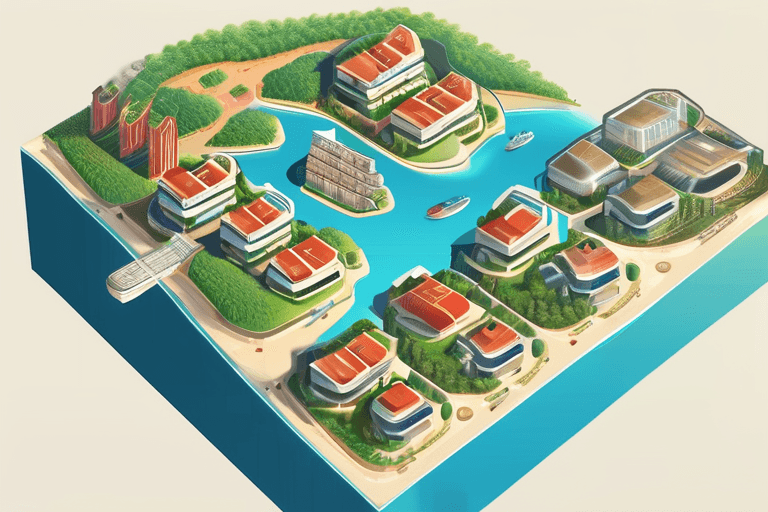
Ocean Flower Island, a sprawling real estate development in Hainan, China, remains a partially completed testament to the country's ongoing property crisis, despite its initial promise. Inspired by Dubai and driven by the ambitions of a now-disgraced developer, the project features a large shopping mall, a conference center, high-rise apartments, and a hotel, all surrounded by numerous unfinished villas.
The project, located on man-made islets in the South China Sea, has struggled to attract businesses and visitors. "This place is a dead zone," said Zhou Qingbin, a visitor from the nearby coastal city of Danzhou, highlighting the lack of activity despite the scale of the construction. The municipal government of Danzhou now controls much of the island.
Ocean Flower Island exemplifies the challenges China faces in resolving its real estate woes. The sheer scale of the investment and the number of stakeholders involved make it difficult to simply abandon the project. The situation reflects a broader issue within the Chinese economy, where significant capital is tied up in unfinished or underutilized real estate ventures.
The development's struggles highlight the risks associated with large-scale, ambitious projects, particularly in the real estate sector. Over-optimistic projections and a lack of careful planning can lead to significant financial losses and abandoned developments. The case of Ocean Flower Island serves as a cautionary tale for future real estate ventures in China and elsewhere.
The future of Ocean Flower Island remains uncertain. While the Danzhou government has taken control, it is unclear whether they will be able to revive the project or find alternative uses for the existing infrastructure. The island stands as a visible reminder of the complexities and challenges facing China's real estate market.


















Discussion
Join the conversation
Be the first to comment