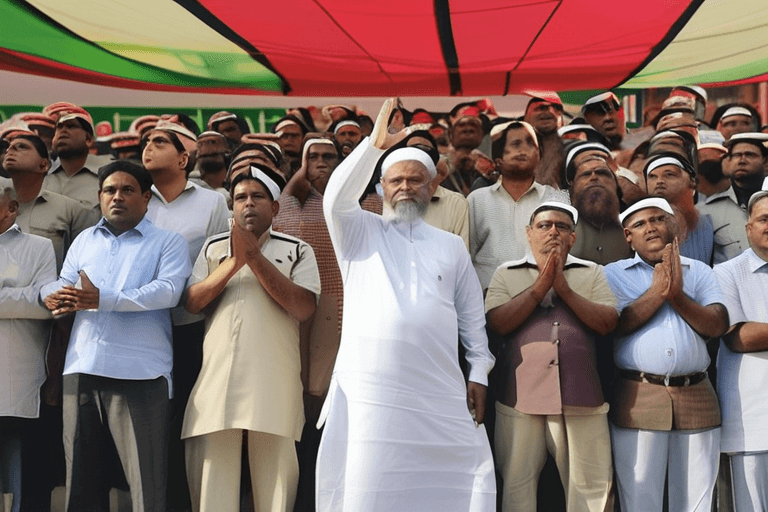
For the first time, some observers believe Bangladesh's Jamaat-e-Islami party has a credible chance of leading the country as part of a governing alliance. The Islamist party, known as Jamaat, is seeing increased support ahead of the general election scheduled for February 12.
Abdur Razzak, a 45-year-old banker and Jamaat supporter in Faridpur district, said he observed widespread unity among people he met in voting for the party. Bangladesh, the world's eighth-most populous country, also holds the distinction of having the fourth-largest Muslim population globally.
Jamaat-e-Islami advocates for an Islamic state in Bangladesh. The party's history is complex, marked by its controversial role during the 1971 Liberation War, where some members opposed independence from Pakistan. This has led to accusations of war crimes and subsequent trials of several top leaders in recent years, impacting the party's image and activities.
The party was banned from participating in elections for several years, a ban that was lifted by the Bangladesh High Court. This ruling has allowed Jamaat to re-enter the political arena, further complicating the already tense political landscape in Bangladesh.
Bangladesh's political scene is dominated by the Awami League and the Bangladesh Nationalist Party (BNP). Jamaat's potential rise could significantly alter the existing power dynamics, especially if it forms a coalition with either of the major parties or emerges as a kingmaker in a hung parliament. The upcoming election is seen as a crucial test of Jamaat's current level of support and its ability to influence the future direction of Bangladeshi politics.














Discussion
Join the conversation
Be the first to comment