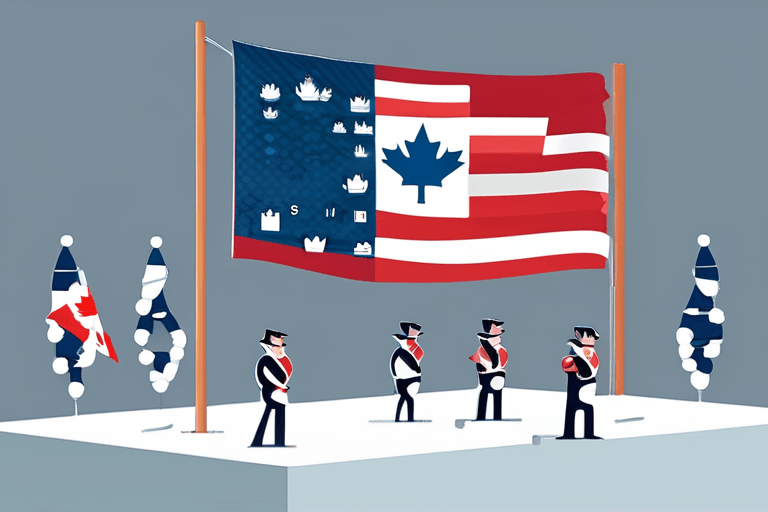
Speaking at the World Economic Forum in Switzerland on Tuesday, President Donald Trump stated that Canada should be "grateful" for the "freebies" it receives from the United States. The remarks came a day after Canadian Prime Minister Mark Carney delivered a speech at the same forum, warning of a significant geopolitical rupture in the world order.
Trump specifically referenced Carney's address, which reportedly contained criticisms of U.S. foreign policy. "Canada gets a lot of freebies from us, by the way. They should be grateful, also, but they’re not. I watched your prime minister yesterday. He wasn’t so grateful," Trump told the audience. "Canada lives by the United States. Remember."
The specific "freebies" to which Trump referred were not explicitly detailed in his remarks. However, trade relations between the two countries have been a recurring point of contention during Trump's presidency. The United States-Mexico-Canada Agreement (USMCA), which replaced the North American Free Trade Agreement (NAFTA), was implemented in 2020 after lengthy negotiations. While hailed by Trump as a significant achievement, some Canadian officials and industries have expressed concerns about certain provisions within the agreement, particularly regarding dairy and automotive trade.
Carney's office has not yet released an official statement responding to Trump's comments. However, sources within the Canadian delegation at the World Economic Forum indicated that Carney's speech focused on broader global challenges, including climate change and economic inequality, and did not specifically target the United States.
The relationship between the United States and Canada, while historically strong, has experienced periods of tension under the Trump administration. Disputes over trade, defense spending, and environmental policies have created friction between the two nations. The USMCA agreement aimed to modernize trade relations, but underlying disagreements persist.
Political analysts suggest that Trump's remarks may be aimed at pressuring Canada to make further concessions in future trade negotiations or to increase its contributions to shared defense initiatives. The comments also come amid ongoing discussions about border security and immigration policies between the two countries. The situation remains fluid, and further statements from both the U.S. and Canadian governments are expected in the coming days.




















Discussion
Join the conversation
Be the first to comment