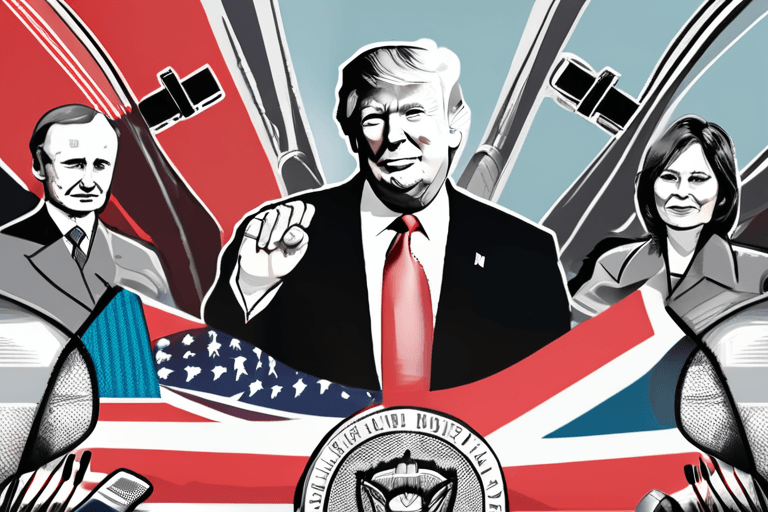
Foreign Secretary Yvette Cooper stated that the United Kingdom would not be signing up to U.S. President Donald Trump's proposed Board of Peace due to concerns regarding the potential participation of Russian President Vladimir Putin. Cooper made the announcement to the BBC from Davos, Switzerland, where she was attending the World Economic Forum.
Cooper told the BBC that the UK had received an invitation to join the board but "won't be one of the signatories today" at the planned ceremony in Davos. She described the charter as a "legal treaty that raises much broader issues" than the initiative's stated goal of resolving the Israel-Hamas conflict in Gaza.
The Board of Peace, a White House initiative, aims to establish a new framework for international diplomacy and conflict resolution. The proposed charter does not specifically mention the Palestinian territories and has been interpreted by some as an attempt to supplant certain functions of the United Nations. The initiative comes amid growing global concerns about the effectiveness of existing international institutions in addressing protracted conflicts and maintaining peace.
Several countries, including Saudi Arabia, Turkey, Egypt, and Israel, have already committed to joining the board. President Trump announced in Davos that Putin had accepted an invitation to participate, a claim that has not been independently verified by the Kremlin. Putin himself stated that Russia was still reviewing the invitation. Russia's potential involvement raises complex geopolitical considerations, given its existing relationships in the Middle East and its strained relations with many Western nations.
The UK's decision to hold off on joining the Board of Peace reflects a cautious approach to the initiative, prioritizing careful consideration of the broader implications and potential risks associated with Russia's involvement. The situation remains fluid, and the UK's future engagement will likely depend on further clarification regarding the board's mandate, structure, and the roles of its members. The next steps will involve continued diplomatic discussions and assessments of the evolving geopolitical landscape.



















Discussion
Join the conversation
Be the first to comment