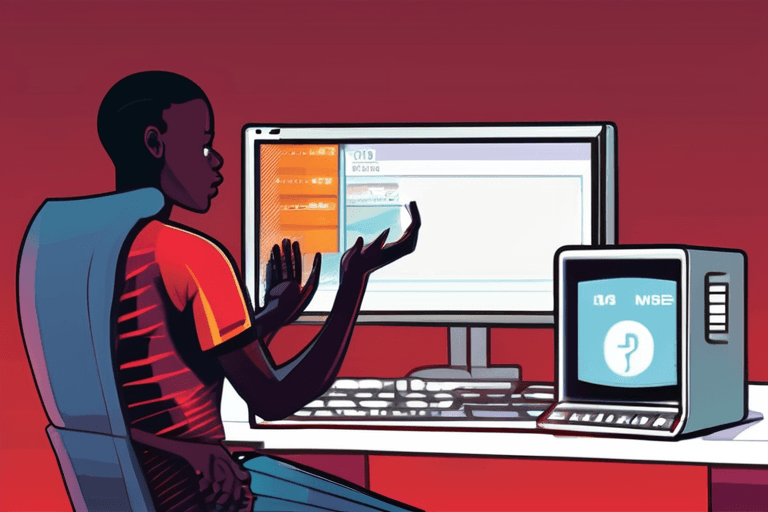
Uganda's economy took a major hit last week, with mobile money agents like Mirembe Tracy sidelined as the government benched the internet during the nation's general election. Tracy, a key player in Kampala's financial ecosystem, saw her scoring opportunities plummet, going from a potential 450,000 Ugandan shillings (approximately $130 USD) per week to a goose egg, according to the BBC.
The internet shutdown, ordered by Uganda's communications authority, was a controversial play aimed at "ensuring peace, protecting national stability and preventing the misuse of communication platforms during a sensitive national exercise." Think of it as a defensive strategy, designed to lock down the field and prevent any potential fouls.
However, the opposition cried foul, claiming the move was a blatant attempt to mask voter fraud and prevent their agents from sharing real-time results. It's like a team accusing the refs of being in the pocket of the other side, a classic move in any high-stakes contest.
For Tracy, the internet blackout was a game-changer, and not in a good way. Her primary source of income, commissions from mobile money withdrawals, was completely shut down. "All withdrawals were disconnected," she told the BBC, highlighting the immediate impact. With her ability to score points eliminated, she was forced to sit on the sidelines, only able to sell prepaid airtime, a minor league play that "does not give a commission."
This isn't the first time Uganda has called this timeout. During the 2016 elections, a similar internet shutdown occurred, drawing comparisons to other nations where governments have used internet restrictions as a strategic maneuver during critical periods. It's a play that's becoming increasingly common in the global playbook of political control.
The current status is uncertain, but the impact on Uganda's digital economy is undeniable. While the government claims it was a necessary measure to maintain order, the lost income and disruption to businesses like Tracy's paint a different picture. The final score is still being tallied, but one thing is clear: Uganda's internet shutdown was a costly gamble with significant consequences for its citizens.



















Discussion
Join the conversation
Be the first to comment