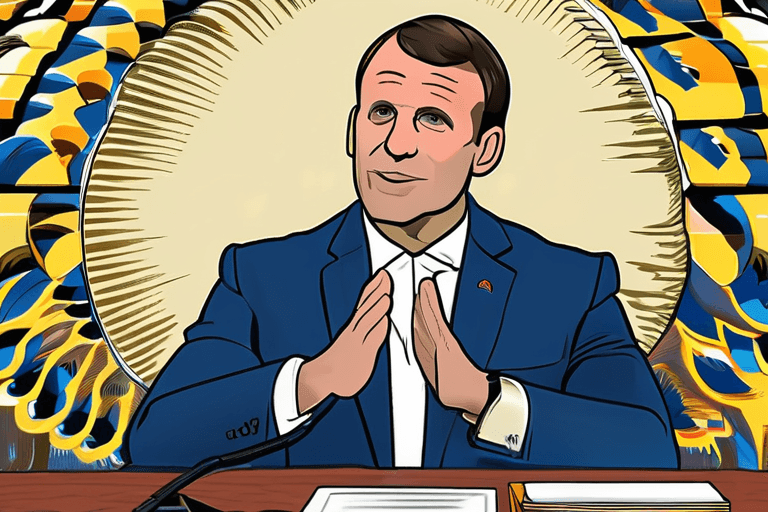
French President Emmanuel Macron addressed the World Economic Forum in Davos, Switzerland, on Tuesday, stating that "now is not a time for new imperialism or new colonialism." Macron's remarks, delivered at the annual gathering of global elites, were widely interpreted as a direct critique of U.S. President Donald Trump's recent foreign policy actions and pronouncements.
Trump, who spoke at the forum on Wednesday, did not directly address Macron's comments but delivered a speech touching on various topics, including energy, international relations, and trade. He also made a passing remark about Macron's sunglasses.
Macron's statement comes in the wake of Trump's recent actions, including the detention of the Venezuelan president and repeated threats regarding the Panama Canal. Trump has also publicly expressed interest in acquiring Greenland, a self-governing territory of Denmark. These actions have drawn criticism from various international actors, who view them as indicative of a renewed imperialistic approach by the United States.
The concept of colonialism, historically associated with European powers, involves the establishment and maintenance of political and economic control over dependent territories. Critics argue that selective condemnation of colonialism, without acknowledging the historical roles of European nations, lacks credibility. Some observers point to ongoing economic and political influence exerted by former colonial powers in Africa and other regions as evidence of neo-colonialism.
The World Economic Forum in Davos brings together political leaders, business executives, academics, and journalists to discuss pressing global issues. This year's forum has focused on topics such as climate change, economic inequality, and the future of technology. The exchange between Macron and Trump highlights the ongoing tensions and differing perspectives on international relations and global power dynamics. The implications of these exchanges remain to be seen as both leaders continue to navigate complex geopolitical challenges.



















Discussion
Join the conversation
Be the first to comment