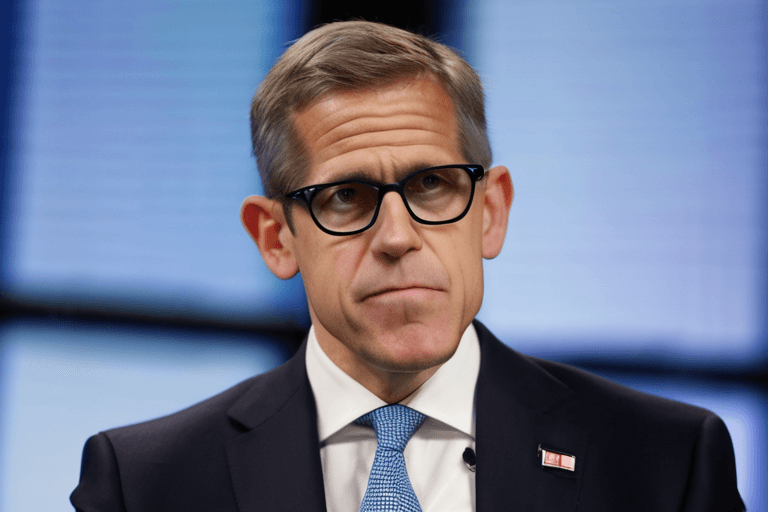
Speaking from a historic military fortress in Quebec City, Canadian Prime Minister Mark Carney stated that Canada must serve as a "beacon to a world that's at sea," emphasizing the importance of national unity amid a shifting global political landscape and increasing domestic challenges. The address, delivered Thursday, followed Carney's earlier remarks at the World Economic Forum in Davos, Switzerland, where he critiqued the erosion of the rules-based international order.
Carney's speech in Quebec, while more focused than his Davos address, underscored his concerns about the current state of global affairs. He asserted that Canada's strength derives from its own identity, stating, "Canada doesn't live because of the United States. Canada thrives because we are Canadian." This declaration comes at a time of heightened geopolitical uncertainty, marked by the rise of economic coercion by major powers and a questioning of established international norms.
The "Carney Doctrine," as his Davos speech was dubbed, lamented the weakening of the rules-based order, a system established after World War II to promote international cooperation and prevent conflict. This system, which includes institutions like the World Trade Organization and the International Monetary Fund, is facing challenges from rising nationalism, protectionism, and great power competition. Carney's remarks reflect a growing anxiety among many world leaders about the future of global governance.
The choice of Quebec City as the location for Carney's speech carries symbolic weight. The city, with its historic citadel built to defend against potential American invasion, represents Canada's long-standing commitment to its sovereignty and distinct identity. This historical context adds depth to Carney's call for national unity in the face of external pressures.
Carney's emphasis on Canada's unique identity and its role as a beacon resonates with a broader debate about the country's place in the world. Canada, often seen as a middle power, has traditionally played a role as a mediator and advocate for multilateralism. However, the changing global order requires Canada to reassess its foreign policy and its relationship with key partners, including the United States. The prime minister's comments suggest a desire for Canada to assert its own values and interests on the world stage, independent of its powerful neighbor.
The speech comes as Carney's government navigates a complex set of domestic and international challenges, including economic uncertainty, climate change, and social divisions. His call for national unity can be interpreted as an effort to build consensus around a shared vision for Canada's future in an increasingly turbulent world. The next steps will likely involve further articulation of Canada's foreign policy priorities and engagement with international partners to address shared challenges.
















Discussion
Join the conversation
Be the first to comment