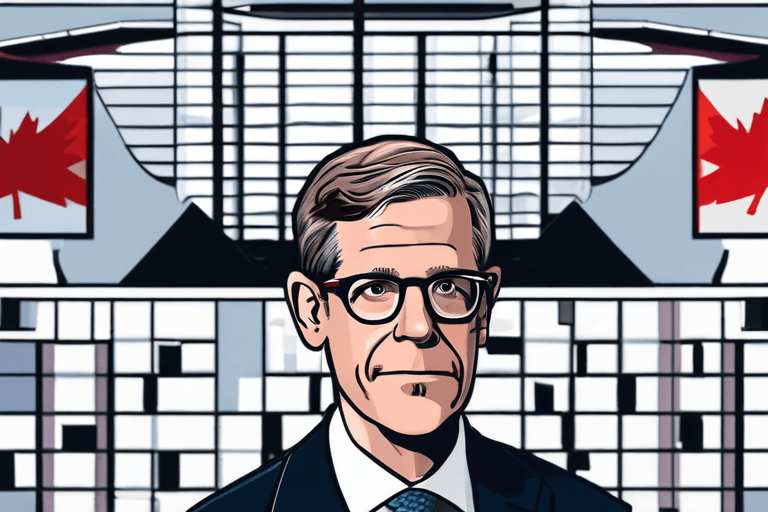
Mark Carney, Canada's prime minister, stated that Canada must serve as a "beacon to a world that's at sea," emphasizing the importance of national unity amid a shifting global political landscape and increasing domestic challenges. The address, delivered at a historic military fortress in Quebec City on Thursday, followed remarks made earlier in the week at the World Economic Forum in Davos, Switzerland. In Davos, Carney lamented the breakdown of the rules-based international order, citing the rise of major powers employing economic coercion as a tool of statecraft.
Carney's speech in Quebec City, while narrower in scope than his Davos address, underscored Canada's unique position in the world. He asserted that Canada's success is rooted in its own identity and values, not dependent on its relationship with the United States. "Carney said that Canada doesnt live because of the United States. Canada thrives because we are Canadian." The choice of location, a citadel built to defend against potential American invasion, added a layer of historical context to his message of Canadian self-reliance.
The prime minister's Davos speech, often referred to as the "Carney Doctrine," highlighted concerns about the erosion of international cooperation and the rise of protectionism. This comes at a time when global institutions are facing increasing strain, and geopolitical tensions are escalating in various regions. The rise of economic nationalism, exemplified by policies such as trade wars and protectionist measures, has challenged the established framework of global trade and cooperation.
Carney's call for Canada to be a "beacon" reflects a broader sentiment among some world leaders who believe in upholding multilateralism and international law. It also comes as Canada faces its own internal divisions and debates about national identity and its role on the world stage. The prime minister's emphasis on national unity suggests an effort to bridge these divides and present a united front in the face of global uncertainty.
The speech in Quebec City took place against a backdrop of significant domestic challenges for the Canadian government, including economic concerns, social issues, and regional disparities. The call for national unity can be seen as an attempt to rally support and foster a sense of shared purpose as the country navigates these challenges. The next steps for the Canadian government will likely involve continued engagement on the international stage, as well as efforts to address domestic concerns and strengthen national cohesion.






















Discussion
Join the conversation
Be the first to comment