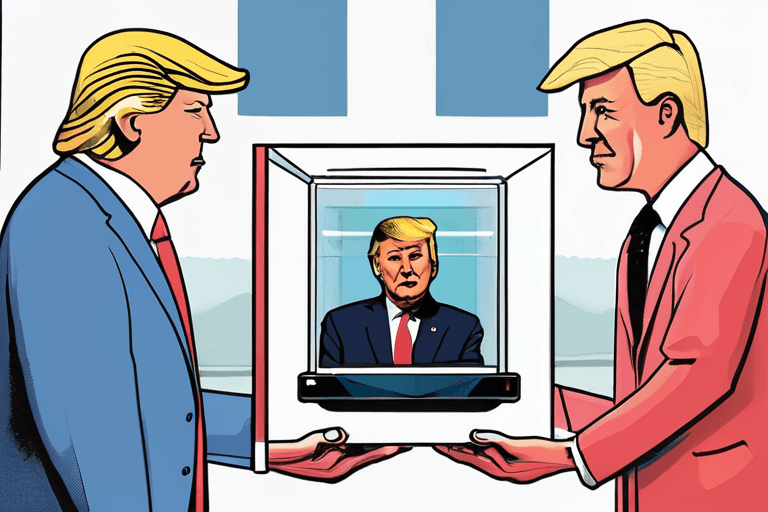
President Donald Trump's recent interest in purchasing Greenland mirrored strategies outlined in his 1987 book, "Art of the Deal," co-written with journalist Tony Schwartz. The book, detailing Trump's experiences in New York real estate, has become a lens through which observers analyze his approach to international relations, particularly during his presidency.
Trump's negotiation tactics, as presented in the book, include aiming high, understanding the "Best Alternative to a Negotiated Agreement" (BATNA), using leverage, allowing others to compromise, and appealing to aspirations. These strategies appeared to be in play during the week in January when Trump's interest in Greenland surfaced and then seemingly subsided.
The concept of a U.S. acquisition of Greenland is not new. The U.S. government considered purchasing the island from Denmark as early as the mid-19th century and again after World War II, recognizing its strategic importance due to its location between Europe and North America. Greenland is an autonomous territory within the Kingdom of Denmark, with its own government and a population of around 56,000 people, primarily Inuit.
Denmark swiftly rejected the notion of selling Greenland. Danish Prime Minister Mette Frederiksen called the idea "absurd" and reiterated that Greenland was not for sale. This firm rejection highlighted the complex relationship between Denmark and Greenland, where issues of sovereignty, self-determination, and cultural identity are paramount.
The situation drew international attention, raising questions about the nature of international diplomacy and the role of historical precedent in contemporary geopolitics. Some analysts suggested Trump's approach was a negotiating tactic aimed at securing other concessions from Denmark or asserting U.S. interests in the Arctic region, where melting ice caps are opening up new shipping routes and access to natural resources.
Tony Schwartz, who co-authored "Art of the Deal," has since expressed regret about his involvement in the book, calling it his "greatest regret." He has publicly criticized Trump's character and leadership style.
As of now, the prospect of a U.S. purchase of Greenland remains dormant. However, the episode underscored the unconventional nature of Trump's foreign policy and sparked a broader discussion about the strategic importance of the Arctic in a changing global landscape.





















Discussion
Join the conversation
Be the first to comment