Here's a news article synthesizing the provided information:
UK Prime Minister Visits China Amidst Tech Advances and Global Security Concerns
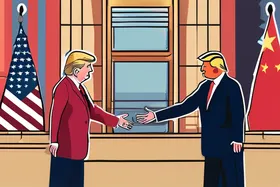
Beijing, China – British Prime Minister Sir Keir Starmer arrived in China for a three-day visit, the first by a British prime minister in eight years, seeking to strengthen trading and cultural ties after years of strained relations, according to BBC World. Starmer, who is scheduled to meet with President Xi Jinping on Thursday, insisted the trip would bring benefits to the UK and emphasized the importance of maintaining a "strategic and consistent relationship" with the world's second-largest economy.
The visit comes as technological advancements and global security concerns dominate headlines. Meta CEO Mark Zuckerberg announced that artificial intelligence (AI) is poised to "dramatically change the way we work," potentially leading to further layoffs at the tech giant, according to BBC Technology. Zuckerberg told financial analysts on Wednesday that AI tools have improved to the point where one engineer can now accomplish tasks that previously required an entire team. He anticipates "2026 to be the year that AI dramatically changes the way we work."
Meanwhile, Waymo, the US driverless car firm, announced its intention to launch a robotaxi service in London as early as September, reported BBC Technology. Local Transport Minister Lilian Greenwood stated, "We're supporting Waymo and other operators through our passenger pilots, and pro-innovation regulations to make self-driving cars a reality on British roads." The UK government is planning regulatory changes in the second half of 2026 to fully enable driverless taxis.
In Europe, concerns over defense capabilities are growing. The EU's foreign policy chief, Kaja Kallas, warned that Europe must urgently improve its defense and make NATO "more European to maintain its strength," reported BBC World. Kallas stated that the US has shaken the transatlantic relationship and that no great power has ever "outsourced its survival and survived."
Simultaneously, Iran is gradually restoring internet access after an almost three-week shutdown, but access remains tightly controlled, according to BBC Technology. The country initially cut off internet access on January 8 in response to what Iranian Foreign Minister Abbas Araghchi described as "terrorist operations." While some citizens are regaining access, independent analysis suggests that much of the country remains cut off from the outside world.

















Discussion
Join the conversation
Be the first to comment