Doomsday Clock Remains at Closest Point to Midnight Amid Global Threats
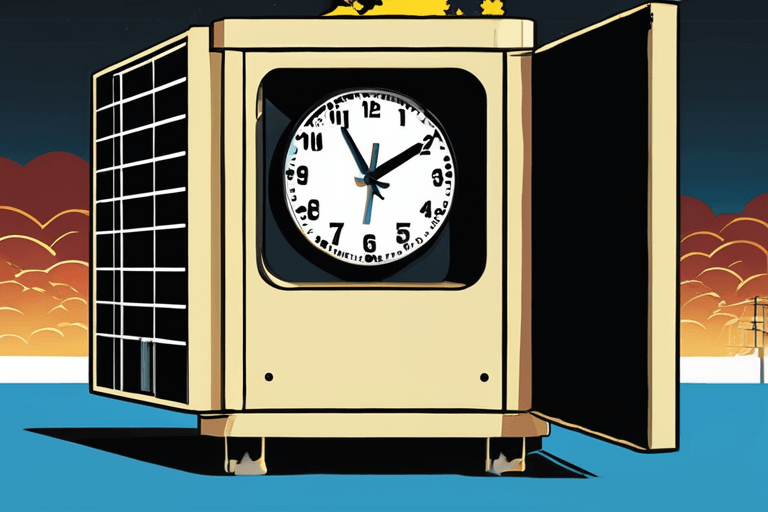
The Doomsday Clock, a symbolic representation of the likelihood of a human-made global catastrophe, remained set at 85 seconds to midnight, the closest it has ever been, according to the Bulletin of the Atomic Scientists Science and Security Board (SABS). The announcement, made Tuesday, January 28, 2026, reflects escalating global threats including nuclear proliferation, climate change, disruptive technologies like artificial intelligence (AI), and biosecurity concerns, compounded by a rise in nationalistic autocracies and a lack of international cooperation.
Multiple news sources reported on the clock's setting, highlighting the increasing dangers facing the world. These threats, combined with political instability, technological disruption, and environmental issues, have prompted calls for global peace.
Pope Leo XIV has appealed for world peace amid these escalating threats, including nuclear proliferation and climate change, as reported by multiple news outlets. The Pope's plea comes at a time when the world is grappling with a range of challenges, from geopolitical tensions involving Iran and the EU's reliance on US military support to tragedies like a plane crash in Colombia and deadly storms in Portugal.
The rise of AI is also contributing to global anxieties. Beyond the Doomsday Clock, AI's potential impact is being examined. Anthropic, an AI company, has been exploring the ethical implications of AI development. Amanda Askell, an in-house philosopher at Anthropic, has been instrumental in the moral education of their chatbot, Claude, even creating an 80-page "soul document" for it, according to Vox.
Other technological advancements also present both opportunities and challenges. For example, Western Sugar's unexpected AI readiness due to their cloud ERP migration demonstrates the potential benefits of technology. However, the environmental impact of digital data storage is also a growing concern.
Amidst these global challenges, some positive developments have emerged. A study suggests that indigenous trees may be key to climate-resilient dairy farming in Benin, West Africa, offering a potential solution to mitigate the effects of climate change.
Bryan Walsh, a senior editorial director at Vox, noted that "everyone wants to warn the world might be ending." The Doomsday Clock serves as a stark reminder of the urgent need for international cooperation and action to address the threats facing humanity.



















Discussion
Join the conversation
Be the first to comment