Driverless Taxis Aim for September Launch in UK Amidst AI Advancements
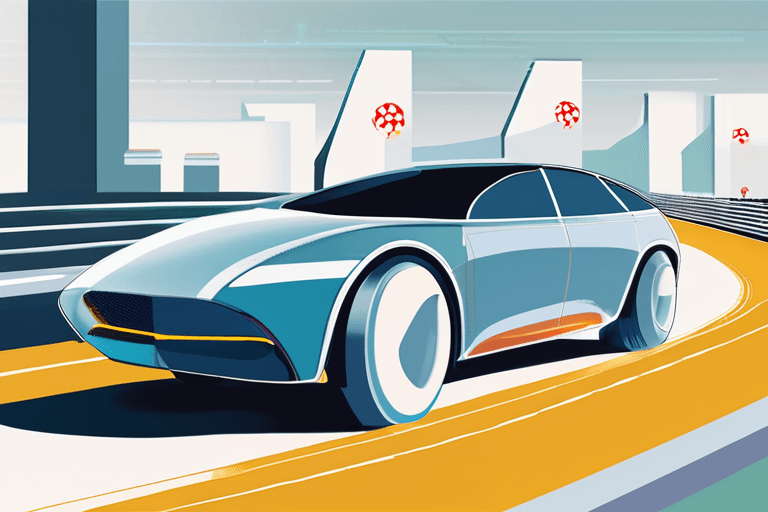
Waymo, the US driverless car firm owned by Google's parent company, announced its intention to launch a robotaxi service in London as early as September, according to BBC Technology and BBC Business reports. This development comes as the UK government plans regulatory changes in the second half of 2026 to fully enable driverless taxis, though a specific date has not been set.
A pilot service is slated to launch in April, with Local Transport Minister Lilian Greenwood expressing support for Waymo and other operators through passenger pilots and "pro-innovation regulations to make self-driving cars a reality on British roads," as reported by BBC Technology.
The push for driverless technology arrives amidst broader shifts in the technology and automotive sectors. Tesla, led by Elon Musk, is shifting its focus to artificial intelligence (AI) and robotics, leading to a 3% decline in annual revenue and a 61% drop in profits in the last three months of 2025, according to BBC Technology. The company plans to end production of its Model S and Model X vehicles, repurposing its California plant to produce humanoid robots known as Optimus. This transition comes as China's BYD overtook Tesla as the world's largest EV maker in January.
In response to the growing importance of AI, the UK government has launched free AI training courses for adults, aiming to reach 10 million workers by 2030, according to BBC Technology. These online lessons will provide advice on prompting chatbots and using them for administrative tasks. The government is calling this the most ambitious training scheme since the launch of the Open University in 1971. However, the Institute for Public Policy Research (IPPR) cautioned that workers will need more than basic chatbot prompting skills to adapt to the growth of AI.
Meanwhile, in Europe, concerns are growing about defense capabilities. EU foreign policy chief Kaja Kallas stated that Europe must urgently improve its defense and make NATO "more European to maintain its strength," as the US has shaken the transatlantic relationship, according to BBC World. Kallas emphasized that no great power has ever "outsourced its survival and survived," highlighting the need for Europe to take greater responsibility for its own security.
















Discussion
Join the conversation
Be the first to comment