Global Economic and Political Landscape Shifts Amidst Policy Changes and Technological Advancements
A series of significant economic and political developments unfolded across the globe, marked by shifts in technology, trade, and international relations. These events, spanning from the United States to China and Latin America, signal a period of transition and recalibration in the global landscape.
In the United States, the Federal Reserve decided to maintain interest rates, keeping its key lending rate between 3.5 to 3.75 percent. According to the Fed, the US economy "has been expanding at a solid pace." This decision came as Fed Chair Jerome Powell defended the independence of the central bank amidst political scrutiny. Powell declined to comment on a criminal investigation into his testimony regarding Fed building renovations but emphasized the importance of central bank autonomy.
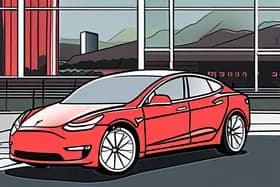
Meanwhile, Tesla, the electric vehicle manufacturer led by Elon Musk, announced a shift in its strategic focus towards artificial intelligence (AI) and robotics. This transition involves ending production of its Model S and Model X vehicles. The California manufacturing plant previously used for these models will now be repurposed to produce Tesla's humanoid robots, known as Optimus. This strategic pivot comes as Tesla reported a 3% decline in annual revenue for 2025 and a 61% drop in profits in the last three months of the year, according to BBC Business. In January, China's BYD surpassed Tesla as the world's largest EV maker.
In Latin America, Mexico's President, Claudia Sheinbaum, confirmed the cancellation of an oil shipment to Cuba. Sheinbaum asserted that the decision was a "sovereign" one and not a response to pressure from the United States. Fuel shortages have been causing increasingly severe blackouts in Cuba, and Mexico has been the island's biggest oil supplier since the US blocked shipments.
Venezuela is also contemplating economic reforms. There is speculation that Delcy Rodríguez, Maduro's successor, could potentially lead the country into an era of reform and opening up, modeled on China's post-Mao boom.
On the diplomatic front, UK Prime Minister met with China's Xi Jinping, aiming for a "more sophisticated" relationship between the two nations. Following the meeting, the Prime Minister stated that progress was made on tariffs and visa-free travel. "We had a very good, productive session with real, concrete outcomes and it was a real strengthening of the relationship," he said, emphasizing the opportunities in China as the second biggest economy in the world. Discussions focused on opening up access for UK businesses and ensuring benefits for the people back home, with progress made on tariffs for whisky and visa-free travel.













Discussion
Join the conversation
Be the first to comment