Global Developments Highlight Space Race, AI Advancements, and Societal Challenges
The early 21st century has been marked by significant global developments, including the rise of China's space program, advancements in artificial intelligence, and increasing societal challenges such as midlife crises and the pursuit of peace in conflict zones.
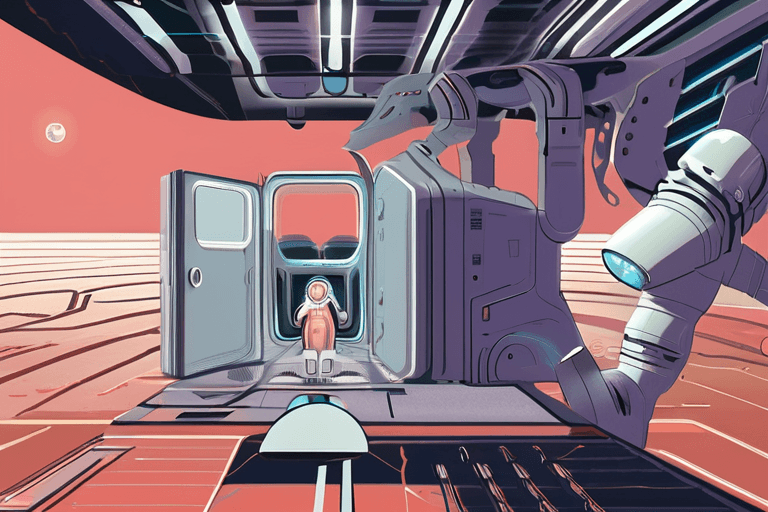
China's space program has rapidly advanced, becoming a major competitor to the United States. Ars Technica reported that China, which first sent a human to orbit in 2003, now possesses spaceflight capabilities second only to the U.S. This rise has had "profound impacts on both civil and military space enterprises in the United States," according to Ars Technica.
In the realm of artificial intelligence, Logical Intelligence, a San Francisco-based startup, is pursuing a new path to artificial general intelligence (AGI). Wired reported that the startup, with Yann LeCun joining its board, is developing an energy-based reasoning model (EBRM) that aims to learn, reason, and self-correct more effectively than current large language models (LLMs). LeCun, formerly of Meta, has criticized the "groupthink problem" in Silicon Valley, where many believe LLMs are the key to achieving AGI.
Meanwhile, societal challenges continue to affect individuals and communities worldwide. Fortune reported on the increasing prevalence and severity of midlife crises in the U.S. Psychoanalyst Elliott Jaques first identified the midlife crisis in the late 1950s, describing it as a period of depression triggered by the realization of one's own mortality. According to Fortune, this phenomenon is marked by "a sudden urge to seize control of respective circumstances and to reinvent oneself in increasingly improbable ways."
In eastern China, access to healthcare remains a challenge for many. Rest of World reported that patients often face long journeys and limited time with specialists. One patient, a 57-year-old kidney transplant recipient, travels to Hangzhou every few months, spending "about three minutes with the doctor," according to Rest of World.
Despite ongoing conflicts, some individuals are working towards peace. NPR reported on two friends, an Israeli and a Palestinian, who believe peace is possible after the war. They are "trying to build peace from the ground up within fi," according to NPR.



















Discussion
Join the conversation
Be the first to comment