AI advancements are presenting both opportunities and challenges across various sectors, while other fields are seeing the impact of social behavior and environmental factors. Recent developments range from the capabilities of artificial intelligence to grid resilience during winter storms and the evolving role of law enforcement.
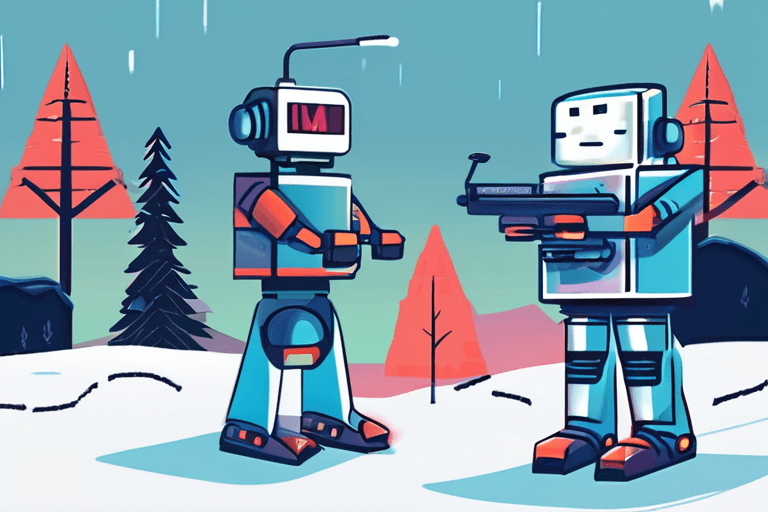
Artificial intelligence is rapidly advancing, demonstrating both impressive capabilities and raising concerns about its potential impact. According to MIT Technology Review, AI models like Grok are generating unexpected outputs, while others, such as Claude Code, are capable of complex tasks like website building and MRI analysis. This has led to anxieties, particularly among Gen Z, about the future of the job market. Unnerving new research suggests AI will significantly impact the labor market this year, the MIT Technology Review reported. Vijoy Pandey, general manager and senior vice president of Outshift at Cisco, told VentureBeat that while AI agents can exchange messages, they lack the ability to understand each other's intent or context. "The bottom line is, we can send messages, but agents do not understand each other, so there is no grounding, negotiation or coordination or common intent," Pandey said. Outshift is attempting to solve this problem with a new architectural approach called the Internet of Cognition.
Meanwhile, a recent snowstorm in the eastern United States tested the resilience of the power grid. Despite record-low temperatures and increased demand, the grid largely kept up, according to MIT Technology Review. However, there were signs of strain, particularly for fossil-fuel plants. One analysis found that PJM, the nation's largest grid operator, experienced significant unplanned outages in plants that run on natural gas and coal. Historically, these facilities can struggle in extreme winter weather.
In another area, the operations of Immigration and Customs Enforcement (ICE) have drawn scrutiny, with some politicians and journalists characterizing the agency as a paramilitary force, according to Fortune. Rep. John Mannion, a New York Democrat, called ICE a "personal paramilitary unit of the president." Journalist Radley Balko, who wrote a book about the militarization of American police forces, argued that President Donald Trump was using the force like an authoritarian, to inflict pain and violence on his political enemies. New York Times columnist Jamelle Bouie characterized ICE as a "virtual secret police and paramilitary enforcer of despotic rule."
Finally, research published in the journal Science suggests that social cues influence foraging decisions, as observed in ice fishing competitions in Nordic countries, according to Ars Technica. The study highlights the complexity of human foraging behavior and its connection to the development of memory, navigational abilities, and social learning. Humans are natural foragers in even the most extreme habitats, digging up tubers in the tropics, gathering mushrooms, picking berries, hunting seals in the Arctic, and fishing to meet our dietary needs.



















Discussion
Join the conversation
Be the first to comment