President Donald Trump made several announcements Thursday regarding international relations, domestic spending, and trade. These announcements included a potential agreement with Russia regarding Ukraine, progress on a funding package in the Senate, and a threat of tariffs on countries selling oil to Cuba.
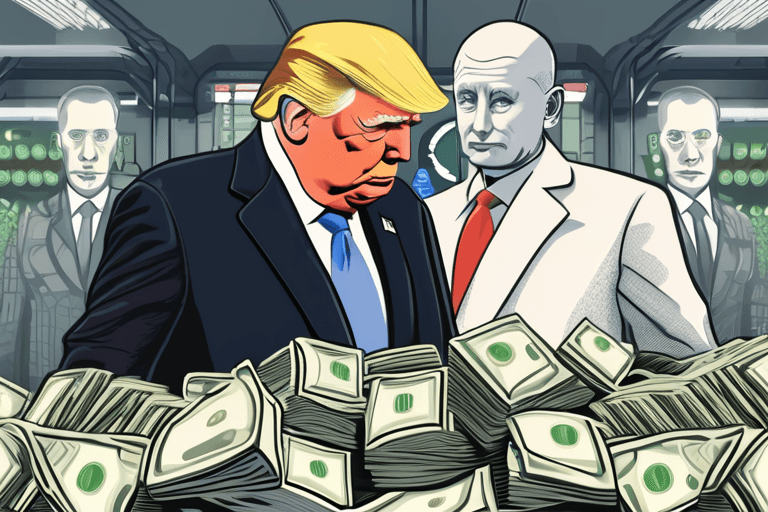
Trump stated that Russian President Vladimir Putin agreed not to attack Ukrainian cities, including Kyiv, for a week due to extremely cold weather. According to BBC World, temperatures in the Ukrainian capital are expected to drop to -24C (-11F) in the coming days. Ukrainian President Volodymyr Zelensky reportedly welcomed Trump's announcement and expressed his expectation that Russia would honor the agreement. Russia has not confirmed any such agreement.
Domestically, Trump announced that Republicans and Democrats in the Senate reached an agreement to move forward with parts of a funding package. According to CBS News, a US partner of BBC, the agreement includes five spending bills, but excludes a sixth bill related to funding for the Department of Homeland Security (DHS). Funding for DHS will continue at its current level for two weeks while negotiations continue. Democrats are reportedly pushing to remove funding for the DHS from the spending bill unless additional oversight is added.
In other news, Trump signed an executive order Thursday laying the groundwork for potential tariffs on goods from countries that provide oil to Cuba, according to The Guardian. The White House cited Cuba's ties to hostile powers as the reason for the order, which aims to increase pressure on the Cuban government. The order declares a national emergency and establishes a process for the US secretaries of state and commerce to assess tariffs against countries.
Meanwhile, the US dollar has experienced a significant drop, hitting a four-year low against a basket of currencies on Tuesday, according to BBC Business. The dollar's decline against the Euro and the pound has slowed, but analysts anticipate further weakening. Chris Turner, global head of financial market research at ING, stated, "Most people would think the dollar should, could, and would weaken further this year." The dollar's tumble follows a dramatic 2025, when Trump's tariff announcements sent the dollar tumbling.

















Discussion
Join the conversation
Be the first to comment