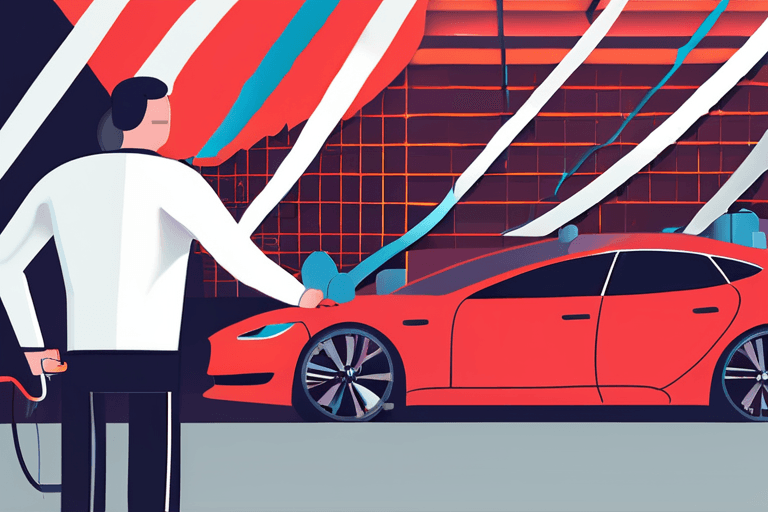
Tesla's robotaxi program faced scrutiny after data revealed a crash rate three times higher than human drivers, even with a safety monitor present in each vehicle. The data, compiled from the National Highway Traffic Safety Administration (NHTSA) crash reports and Tesla's own mileage disclosures, covered incidents between July and November 2025 in Austin, Texas.
According to the data, Tesla reported nine crashes involving its robotaxi fleet during the specified period. These incidents included a right-turn collision, an incident at 18 mph, hitting an animal at 27 mph, a collision with a cyclist, and a rear collision while backing at 6 mph, as reported by Fred Lambert on Hacker News.
The findings suggested a rough start for Tesla's nascent robotaxi program. The higher crash rate raised concerns about the safety and reliability of the autonomous vehicles, despite the presence of a safety monitor in every car.
In other news, a new study by Google indicated that advanced reasoning models achieved high performance by simulating multi-agent-like debates involving diverse perspectives, personality traits, and domain expertise. VentureBeat reported that this internal debate, dubbed "society of thought," significantly improved model performance in complex reasoning and planning tasks. Researchers found that leading reasoning models, such as DeepSeek-R1 and QwQ-32B, inherently developed this ability to engage in "society of thought" conversations without explicit instruction.
Meanwhile, the Vitalism movement, a radical movement focused on longevity, gained traction. MIT Technology Review reported on the Vitalist Bay Summit, a three-day event held in Berkeley, California, which aimed to spread the word of Vitalism. The movement, established by Nathan Cheng and Adam Gries, sought to explore tools, from drug regulation to cryonics, in the fight against death.
In the business world, Starbucks CEO Brian Niccol's turnaround plan showed early signs of success. Fortune reported that Starbucks experienced its first U.S. quarterly comparable sales increase in two years, driven by Niccol's focus on efficient operations, consistency in service, more appealing stores, and a streamlined menu. Niccol stated at his first Starbucks investor day in Manhattan that "the shine is back."
Separately, microdosing, the practice of taking small amounts of psychedelic drugs, was examined for its potential effects on depression. Wired reported that anecdotal reports pitched microdosing as a kind of psychedelic Swiss Army knife, providing everything from increased focus to a spiked libido and lowered reported levels of depression. However, the article suggested its effectiveness for depression appeared to be comparable to drinking coffee.














Discussion
Join the conversation
Be the first to comment