

3 min
AI Insights1m ago
Protests Held in Cities Across the U.S. in Anti-ICE Strike
Protests Held in Cities Across the U.S. in Anti-ICE Strike
Multi-source news update

00
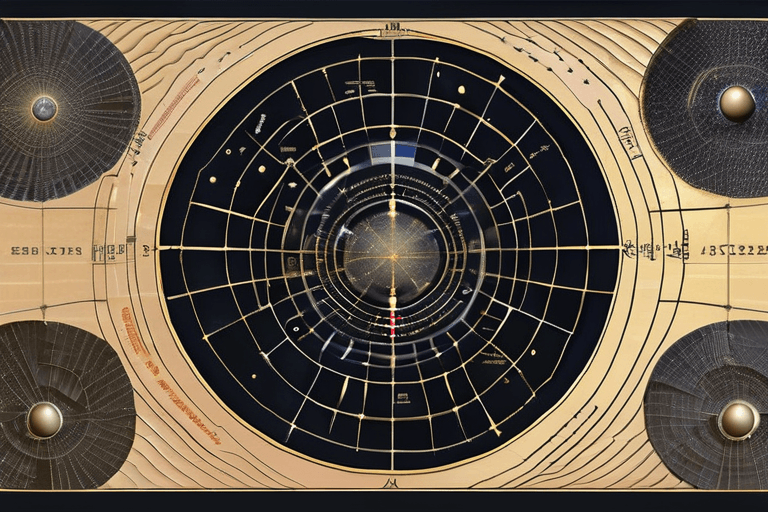
5,500-Year-Old Sumerian Star Map Recorded the Impact of a Massive Asteroid For more than 150 years scientists have tried to solve the mystery of a notorious cuneiform clay tablet that reveals that in the past the impact case of so-called Köfel was detected. The circular stone-cast tablet was discovered in the late 1800s from the 650 BC King Ashurbanipal s underground library in Nineveh, Iraq. Data processing, which was long believed to be an Assyrian tablet, mirrored the sky over Mesopotamia in 3300 BC and proved to be much more ancient Sumerian origin. The tablet is the first astronomical instrument, the Astrolabe. It consists of a segmented, disk-shaped star chart with marked units of angle measure inscribed upon the rim. Unfortunately considerable parts of the planisphere on this tablet are missing (approximately 40), damage which dates to the sacking of Nineveh. The reverse of the tablet is not inscribed. Still under study by modern scholars, the cuneiform tablet in the British Museum collection No K8538 (known as the Planisphere) provides extraordinary proof for the existence of sophisticated Sumerian astronomy. In 2008 two authors, Alan Bond and Mark Hempsell published a book about the tablet called A Sumerian Observation of the Kofels Impact Event. Raising a storm in archaeological circles, they re-translated the cuneiform text and asserted the tablet records an ancient asteroid strike, the Köfels Impact, which struck Austria sometime around 3100 BC. The giant landslid
AI-Assisted Journalism
This article was generated with AI assistance, synthesizing reporting from multiple credible news sources. Our editorial team reviews AI-generated content for accuracy.
Deep insights powered by AI
Continue exploring
















Discussion
Join the conversation
Be the first to comment